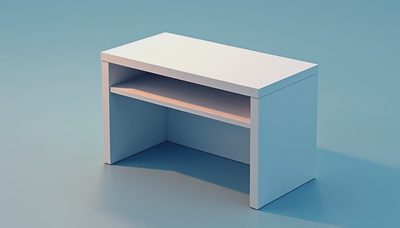


The best quality home office furniture is not necessarily the most expensive furniture in a catalog. It is the desk that stays stable when you type, the chair that supports you through an afternoon call, and the shelving that does not begin to sag under ordinary books. After years of working around office furniture specifications and factory samples, I look for construction details before I look at a finish or a lifestyle photo.
A functional home office starts with your work pattern. Someone editing video needs a deep, rigid desk for two monitors. Someone handling email from a corner may need a compact 42-inch surface and vertical storage. Start with the job, then select materials, dimensions, hardware, and warranty support that can handle it.
What separates durable furniture from good-looking furniture
The first quality test is the frame. For a desk, look for a top at least 1 inch thick, with a rigid apron or steel support beneath it. An apron is the horizontal structure under the desktop that limits flex. A wide particleboard top with no support can bow over time, especially when it carries monitor arms, speakers, and a laptop dock. High-density fiberboard with a durable laminate can perform well, but exposed edges need strong edge banding rather than thin paper tape.
Solid wood is attractive and repairable, but it is not automatically more stable. A properly engineered oak or maple top can last decades, while a poorly dried slab can move with seasonal humidity. Veneer over a stable core is often the smarter purchase for a climate-controlled office. Inspect the joinery too. Metal-to-metal fasteners, threaded inserts, and corner blocks generally provide better serviceability than a few screws driven directly into fiberboard.
For the best quality home office furniture, hardware deserves as much attention as the visible surfaces. A drawer should ride on full-extension slides, which let you use the entire drawer and reduce twisting. Soft-close slides are pleasant, but a steel slide with a sensible load rating matters more. Check whether replacement parts are available and whether the manufacturer publishes assembly instructions.
Desk dimensions that support real work
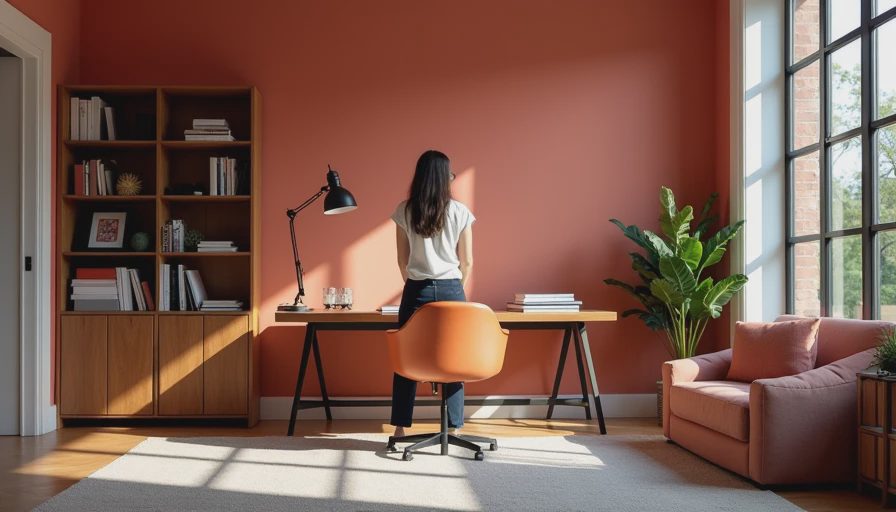
A useful desk is sized around your equipment and reach, not an idealized room photo. For one monitor, keyboard, notebook, and lamp, 48 inches wide by 24 inches deep is workable. A dual-monitor setup is more comfortable at 60 by 30 inches. If you use a monitor arm, measure its clamp clearance and account for the extra rear space. A 30-inch depth also keeps the screen far enough away for a more relaxed viewing position.
Height matters. Most fixed desks sit near 29 or 30 inches, but a desk that feels comfortable depends on your chair, keyboard position, and body proportions. A sit-stand desk should have a stable base at both sitting and standing height. Test the frame for side-to-side movement with the top raised. Some movement is normal at maximum height, but a desk should not wobble when you write or push a mouse.
A cheaper desk can be the better buy when it uses a reliable top and a simple fixed frame. You do not need an electric motor, built-in USB ports, or a glossy lacquer finish to get productive work. Spend money on depth, structural stability, and a finish that resists coffee rings. Those features affect every workday; decorative cable channels often do not.
Choose the chair as an ergonomic tool
A chair is part of your work equipment, not a decoration beside the desk. Look for adjustable seat height, seat depth, back tension, and arm height. Seat depth controls how much of your thigh is supported; too much depth can press behind the knees and encourage slouching. A waterfall seat edge, where the front curves downward, can improve comfort during long sessions.
Mesh backs can provide ventilation, while upholstered backs often offer a warmer, more cushioned feel. Neither material guarantees quality. Check the frame, tilt mechanism, and warranty length. Brands such as Steelcase and Herman Miller are known for extensive adjustment systems and service support, but a well-built mid-priced chair can make more sense for a lightly used office. Try the chair for at least 20 minutes if possible, and pay attention to pressure points rather than showroom softness.
The best quality home office furniture package usually puts a larger share of the budget into the chair and desk frame than into matching storage. A $700 chair paired with a $350 desk can be more useful than a $1,000 decorative desk and a $150 chair with limited adjustment.

Storage for small rooms and shared spaces
Storage should fit the wall you have, not the office you wish you had. In a 10-by-11-foot room, a 60-inch desk on one wall and a 30-inch-wide bookcase on the adjacent wall can leave a practical central aisle. Keep at least 30 inches of walking clearance where possible. In a shared room, a 48-inch desk with a two-drawer pedestal can provide work capacity without visually taking over the space.
For a closet office, measure the opening, baseboards, outlets, and door swing before ordering anything. A 20- to 24-inch-deep wall-mounted work surface can fit many shallow closets, but it needs a ledger or bracket system rated for the load. Add a vertical shelf above the desk rather than forcing a deep cabinet into the chair zone. For heavy binders, shelves should have a center support or a rigid front edge; long unsupported particleboard shelves eventually sag.
If you store paper, tools, or camera equipment, prioritize closed cabinets. Open shelving is easy to access but collects dust and creates visual noise on video calls. Adjustable shelves are more valuable than a fixed grid because they can accommodate a printer, archive boxes, or a small speaker later.
A practical buying inspection
Before you order, write down your equipment list and the measurements of the room. Include monitors, speakers, a laptop stand, lighting, and the clearance needed to pull out the chair. Then inspect the product page for top thickness, frame material, drawer slide type, weight capacity, assembly method, and warranty terms. If those specifications are missing, treat the absence as information rather than assuming the furniture is robust.
When the box arrives, inspect every panel before assembly. Look for crushed corners, bubbling laminate, uneven veneer, and predrilled holes that do not align. Tighten fasteners gradually and retighten them after the first week of use. Do not overtighten particleboard connections, since stripped holes are difficult to repair. Keep the hardware bag and manual; replacement parts and warranty claims are much easier with the product information available.
A return policy also matters. A desk that looks compact online can feel oversized once the chair, power strip, and filing cabinet are in place. Mark the footprint on the floor with painter's tape before delivery. This simple step can prevent a costly return and reveal whether drawers will hit a wall or whether the chair can roll back far enough.
Build a workspace that earns its cost
The best quality home office furniture should reduce friction every day. Choose a desktop deep enough for your screen, a frame that stays steady, a chair with genuine adjustment, and storage that matches your room dimensions. You can save by choosing laminate instead of solid wood, a fixed desk instead of a motorized model, or a simpler bookcase with sound shelf supports. Those are intelligent compromises when the construction remains dependable.
If you work from home 30 or more hours a week, calculate the purchase over several years rather than comparing only the checkout price. A $900 setup used five days a week for five years costs less than 50 cents per work hour before considering resale or replacement. Measure first, inspect the specifications, and buy the components that affect your body and workflow most. That is how the best quality home office furniture becomes a practical investment instead of another attractive mistake.