

Knowing where to buy high quality home office furniture is less about finding the fanciest showroom and more about reading the product specification before you pay. A desk can look excellent in a staged photo and still wobble, chip, or crowd your knees within a year. After a decade in home-office furniture product management, I look first at materials, hardware, dimensions, repairability, and warranty coverage. Those details tell you far more than a lifestyle image.
Start with the furniture, not the retailer
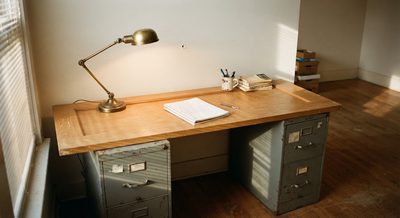
Before comparing stores, decide what the piece must do for eight hours a day. A writing desk for a laptop needs different construction from a 72-inch workstation holding two monitors, speakers, a microphone arm, and a desktop computer. Measure the equipment, then add at least 6 inches of working clearance on each side. For most remote workers, a 48- to 60-inch-wide desk with a depth of 24 to 30 inches is the practical range.
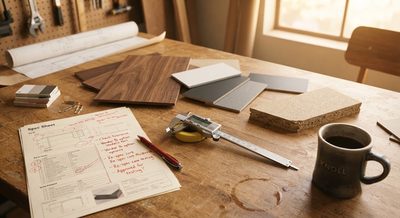
Look for a top at least 1 inch thick when it is made from solid wood or a quality wood composite. A thinner top can work, but it needs a strong apron or metal frame underneath. “Veneer” means a real wood layer bonded over a stable core; it is not automatically cheap. A well-made oak veneer top can stay flatter than a wide solid-wood panel as humidity changes. Avoid particleboard edges that feel swollen, soft, or poorly sealed.
The base matters just as much. Steel legs should have levelers, which are adjustable feet that compensate for an uneven floor. Drawers should use metal slides that extend fully and close without grinding. If a standing desk is on your list, check the lifting capacity, motor warranty, lowest height, and highest height rather than trusting the phrase “premium electric desk.” A $350 desk with a stable frame can outperform a $700 desk with decorative hardware.

Where to buy high quality home office furniture online
Online specialists are often the most efficient place to compare specifications. Branch, Fully through Herman Miller, UPLIFT Desk, Steelcase, and Herman Miller publish dimensions, adjustment ranges, finish choices, and warranty information more clearly than many general retailers. That makes research easier, especially when you are fitting furniture into a spare bedroom or a corner shared with another activity.
Large retailers have a different advantage. IKEA is strong for modular storage, cable management, and budget-friendly surfaces, although you need to inspect the back panels and confirm the load rating. West Elm and Crate and Barrel offer more finished design language, but compare construction details carefully because appearance alone does not establish durability. Office furniture dealers can be excellent for task chairs and commercial-grade desks, especially when you are comfortable buying refurbished inventory.
A useful shopping sequence is simple: shortlist three products, download their assembly instructions, compare the warranty, and search for replacement parts before ordering. If a company will not identify the frame material, drawer hardware, or return shipping process, move on. This process is more reliable than filtering by five-star reviews, which often focus on color and delivery rather than a desk's behavior after 18 months.
Match the store to your room dimensions
A 10-by-11-foot office can handle a 60-inch desk, a 30-inch-deep bookcase, and a 36-inch clearance behind the chair if the door swing is planned first. In that room, where to buy high quality home office furniture should include retailers with modular storage, because a narrow 12-inch-deep shelf may hold files without consuming valuable floor space.
For a living-room corner, use a desk no wider than 42 to 48 inches and keep at least 30 inches of clear passage beside it. A wall-mounted desk can save floor space, but anchor it into studs and verify the weight rating. In a closet office, remove the door only if ventilation and privacy work for the household. A 20- to 24-inch-deep surface, a monitor arm, and a rolling chair that tucks fully underneath can produce a workable setup without pretending the closet is a full office.
Shared spaces need furniture that can disappear. A folding desk or a cabinet with a drop-front surface is useful when it has reinforced hinges and room for cable routing. Do not sacrifice chair fit to gain storage. Your knees need roughly 24 inches of clear width, and the chair should support your lower back without forcing your shoulders forward.

How to judge quality before delivery
Product photos hide the areas that usually fail. Read the assembly manual and look for cam locks, threaded inserts, and bolts rather than tiny wood screws carrying the entire load. Cam locks are common connectors that tighten a panel against a fixed stud; they are acceptable when the panels are thick and the connection is supported. Repeated disassembly can weaken low-density board, so choose metal inserts if you expect to move frequently.
Inspect the warranty language for specific coverage. A five-year frame warranty is more meaningful than a ten-year promise that excludes motors, finishes, labor, and shipping. For a chair, check whether the cylinder, casters, armrests, and mechanism are covered separately. For a sit-stand desk, listen for the warranty period on motors and control boxes. Keep every fastener and the assembly instructions in a labeled bag. Those small parts are surprisingly hard to replace after a move.
If returns cost $150 or require disassembling a 120-pound desk, that policy changes the real price. Measure stairways, elevators, and door openings before ordering. A quality desk that cannot enter the room is not a quality purchase for your situation.
Where to buy high quality home office furniture on a realistic budget
You do not need to buy every component from one brand. Spend first on the parts that affect your body and daily stability: the chair, desk frame, and monitor position. Save on decorative shelves, cable trays, and drawer organizers. A $250 to $450 fixed-height desk can be a sensible choice, while a reliable electric standing desk commonly costs more because it includes motors, control electronics, and a reinforced frame.
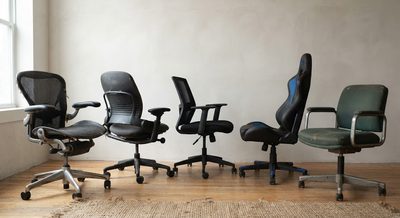
Refurbished commercial chairs from Steelcase or Herman Miller can offer better mechanisms than a new chair at the same price, but inspect the fabric, cylinder, tilt lock, and arm pads. For desks, a used office table with a solid laminate top may be a better buy than a fashionable veneer piece with damaged edges. Ask for close-up photos, the exact dimensions, and evidence that wobble is not caused by missing hardware.
This is also where to buy high quality home office furniture with patience: during office liquidations, seasonal sales, or warehouse clearance events. Avoid buying a complete matching set simply because the discount looks large. A coordinated room is less useful than a desk that fits your monitor, chair, and workflow.
A practical buying plan
Start by drawing the room on graph paper using measurements in inches. Mark doors, windows, outlets, and heating vents. Place the desk, chair clearance, and storage before considering decoration. Then write down the load each surface will carry. A monitor arm, desktop computer, speakers, and books can easily exceed 75 pounds, so the top and frame need more than a casual laptop table provides.
When deciding where to buy high quality home office furniture, compare the delivered cost rather than the sticker price. Include assembly, white-glove delivery, return freight, cable accessories, and a floor mat. Read reviews for recurring complaints about wobble, stripped screws, damaged corners, and missing parts. One isolated delivery problem is different from a pattern of structural failures.
The best setup is usually a deliberate mix: a stable desk sized to the room, a chair with adjustable support, storage that keeps supplies within reach, and enough open floor to move naturally. Buy fewer pieces, specify them carefully, and let the measurements—not the showroom photograph—make the final decision.