

Quality home office furniture is not defined by a staged room, a walnut finish, or a four-figure price tag. It is furniture that stays stable, supports your working posture, survives daily use, and fits the actual room you have. After years managing home-office products and rebuilding my own workspace in Charlotte, I look at a desk the same way I look at a tool: what is it made from, how is it assembled, and will it still do the job five years from now?
Start with the work, not the style
Before shopping, write down what happens at the desk. A laptop-only setup needs less depth than a dual-monitor workstation. A designer using a 27-inch display, drawing tablet, speakers, and reference books needs more surface and better cable control. For most remote work, I recommend a desk at least 48 inches wide and 24 inches deep. If you use two monitors or keep paperwork open, 60 by 30 inches is a more comfortable target.
Quality home office furniture should support those measurements without forcing you into a matching collection. A simple laminate desktop on a rigid steel frame can outperform an ornate solid-wood desk with a shallow work surface. Measure the room, then mark the proposed footprint with painter's tape. Leave about 30 inches behind the chair for movement and at least 24 inches for a usable walkway. In a 10-by-11-foot room, a 60-inch desk against the long wall leaves room for a 30-inch-deep bookcase on the opposite side.
Think about reach, too. Items used every hour belong within arm's length; archive boxes can go on a higher shelf. This small planning step prevents the common mistake of buying a beautiful desk that turns every video call into a wrestling match with a lamp, microphone, and monitor stand.

Inspect the materials and construction
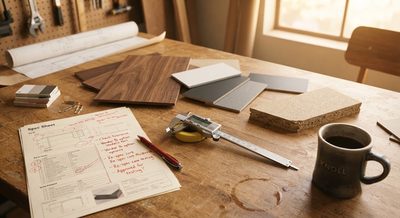
A desktop's label tells you less than its edge and underside. Solid hardwood can be repaired and refinished, but it is heavy and often costs more than necessary. Medium-density fiberboard, or MDF, is a dense engineered wood that provides a smooth, stable surface when it is sealed properly. High-pressure laminate over a quality substrate is especially practical for home offices because it resists coffee rings, pens, and ordinary scratches.
Particleboard is not automatically bad. A well-made panel with a dense core, sealed edges, and proper fastening can serve reliably. The weak point is usually cheap hardware or an unsealed edge that absorbs moisture. Look underneath the desk for a thick apron, cross support, or steel stretcher. If the top flexes when you press near the center, monitors will wobble and drawers will eventually misalign.
Quality home office furniture also uses hardware that can be serviced. Metal drawer slides should feel smooth and close evenly. Threaded inserts are preferable to screws driven directly into soft board because they can be tightened repeatedly during moves. For a sit-stand desk, inspect the lifting columns, control panel, and cable tray. A height range around 27 to 47 inches covers many seated and standing users, but stability at the tallest setting matters more than a flashy control preset.
Spend money where your body notices it
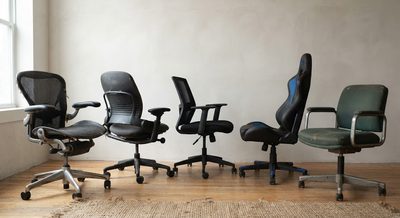
The chair is usually the most important purchase because it supports you for more hours than any other item. Look for adjustable seat height, seat depth, armrests, and back support. A chair with a 17-to-22-inch seat-height range accommodates many desks, while a seat depth around 17 to 19 inches leaves space behind the knees for many adults. The correct fit matters more than a premium logo.
Quality home office furniture includes a desk that lets your elbows rest near 90 degrees while typing. If the fixed desk is too high, a footrest or keyboard tray can solve part of the problem, but neither replaces a suitable chair. Monitor height is another low-cost improvement: the top third of the screen should sit near eye level, with the display roughly an arm's length away. A $40 monitor arm can be more valuable than upgrading from a basic laminate top to exotic wood.
A sit-stand desk makes sense for someone who alternates positions throughout the day, not someone expecting it to erase poor posture. Choose a two-stage or three-stage frame with a tested load rating that exceeds your equipment weight. Add an anti-fatigue mat if you stand for longer sessions, and keep the transition slow enough that cables do not tug on the computer.
Make storage work in the room you have
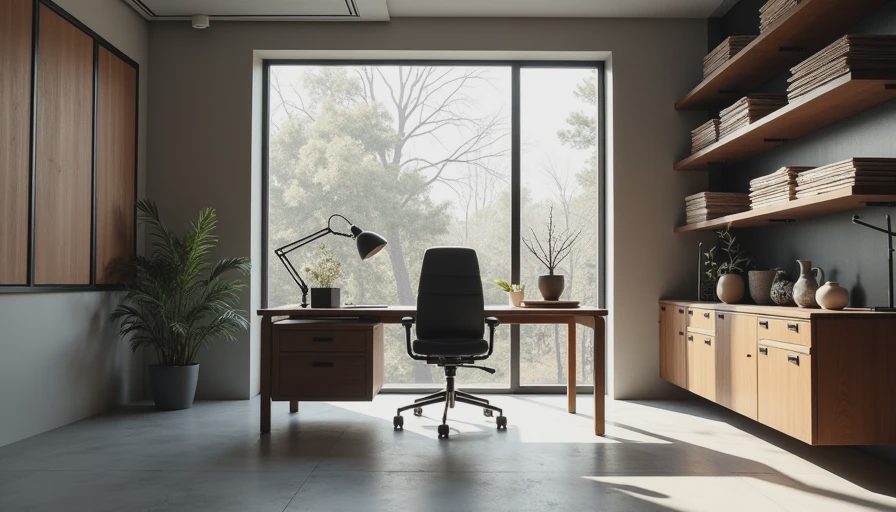
Storage should reduce visual noise without stealing the floor space needed to work. In a dedicated office, a 12-inch-deep bookcase holds notebooks, binders, and small equipment while leaving the room open. Deeper shelves are useful for printer paper and storage bins, but they can make a narrow room feel crowded. Anchor tall units to the wall, especially in homes with children or pets.
For a shared room, a 48-inch-wide desk with a 24-inch depth can sit behind a sofa or along a dining-room wall. Use a narrow rolling pedestal for files and move it under the desk when guests arrive. A wall-mounted shelf above the monitor can hold reference books, but leave enough clearance to avoid hitting your head when standing. In a bedroom closet office, remove the door if allowed, use a 20-to-24-inch-deep worktop, and route cables through a rear grommet rather than letting them hang across the floor.
Quality home office furniture should make the room easier to reset. Closed storage hides chargers and paperwork; open shelving keeps daily tools visible. I prefer one drawer for active supplies, one labeled bin for technology, and a separate location for records. That arrangement costs less than a wall of cabinets and makes Friday cleanup take minutes instead of an hour.
Compare price against service life
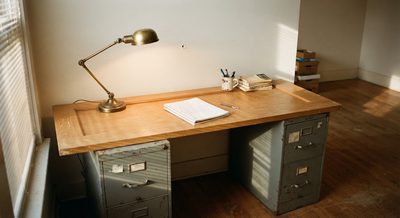
A $250 desk can be the right buy if it has a rigid frame, a sealed top, replaceable fasteners, and dimensions that match your workflow. A $1,200 desk is not automatically better if most of the price pays for styling or a brand name. Ask what the warranty covers, whether replacement parts are available, and whether assembly uses standard bolts rather than proprietary clips.
Quality home office furniture earns its price through fewer compromises. A solid frame that lasts eight years costs less per year than a bargain desk replaced twice. The same logic applies to chairs, monitor arms, and filing units. Brands such as IKEA can offer sensible modular storage and desktops at accessible prices, while Steelcase and Herman Miller typically focus more heavily on ergonomic seating and long-term service. Compare the specific model, not just the logo.
When shopping online, read the assembly manual if it is available. Check the boxed dimensions, top thickness, weight capacity, and return shipping terms. A desk that weighs 35 pounds may be easy to deliver but less resistant to movement than a 90-pound frame. Reviews are useful for spotting recurring wobble or damaged parts, but the specification sheet should make the final call.
Build a setup that can change
Your work will change. A laptop may become two monitors; a side business may require inventory shelves; a second person may need the room. Buy a desk with at least one cable grommet and enough clearance for a future monitor arm. Keep 6 to 8 inches of usable wall space beside the desk for a lamp, acoustic panel, or small shelf. These details preserve options without turning the room into a showroom.
Quality home office furniture is ultimately a system of surfaces, support, storage, and access. Start with measurements, test the chair, inspect construction, and spend on the parts you touch every day. If your current setup causes shoulder tension, cable tangles, or constant shuffling, change one structural problem at a time. A well-planned 8-by-10-foot office can outperform a larger room filled with mismatched pieces.
Take your measurements before opening a shopping tab, set a realistic budget, and compare complete setups rather than isolated products. The best office is not the one that photographs most impressively. It is the one that lets you finish an eight-hour workday, close the laptop, and leave the room ready for tomorrow.