

High quality home office furniture is less about a polished showroom photo and more about what happens during hour six of a workday. Does the desk stay steady when you type? Does the chair support your hips without forcing your shoulders forward? Can you reach a file without standing up and interrupting a call? After a decade managing office furniture categories, I look at those questions before I look at color or style.
The good news is that durable equipment does not always require a luxury budget. A $700 desk with reliable hardware can outperform a $1,500 desk covered in attractive but fragile veneer. The goal is to spend on structure, adjustability, and repairable components, then save on features that only look impressive in a product listing.
Start with the work, not the room photo
Before shopping, write down what you actually do for eight hours. A video editor with two 27-inch monitors needs more depth and cable capacity than someone working from a laptop. A bookkeeper may value drawers and a printer shelf, while a designer may need a clear 60-inch-wide surface for sketches and samples.
For most computer work, I start with a desk that is at least 48 inches wide and 24 inches deep. Sixty inches by 30 inches is a better long-term size if the room allows it. That extra six inches of depth creates a useful gap between your keyboard and monitor, rather than forcing everything against the back edge.
Measure the room twice. In a 10-by-11-foot office, a 60-inch desk on the 11-foot wall leaves enough space for a 30-inch-deep storage cabinet and a clear walking path. Leave roughly 36 inches behind a chair when possible. If the room is shared, a 48-inch desk placed against a wall may be smarter than squeezing in a large executive desk that blocks the door.

What makes high quality home office furniture last
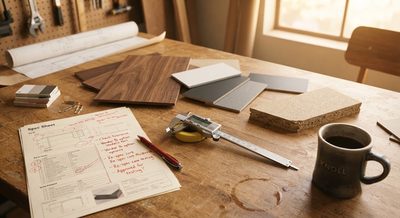
Start with the structural parts. Solid wood is durable, but a well-built desk made from 1-inch-thick engineered wood can also perform extremely well. Engineered wood is a manufactured panel made from wood fibers or chips; good versions are dense, flat, and more resistant to seasonal movement than a wide solid-wood panel. Look for a finished back edge, sealed surfaces, and fasteners that connect into metal inserts rather than repeatedly biting into soft particleboard.
The frame matters just as much. For a fixed desk, welded steel legs or thick hardwood legs should not flex when you lean on the corner. For a sit-stand desk, check the lifting columns, the weight rating, and the warranty on the motor. A dual-motor base is usually smoother and better suited to a large desktop than a single-motor base, especially when you add two monitors and a heavy arm.
Hardware is where many inexpensive pieces reveal themselves. Full-extension drawer slides let the drawer travel almost completely out, making the back usable. Soft-close slides reduce slamming, but they do not compensate for a weak drawer box. I prefer drawers with captured bottoms and square corners over decorative fronts attached to thin boxes.
High quality home office furniture should also be serviceable. A manufacturer that sells replacement casters, control switches, shelves, or desk feet is giving you a realistic path to a five-year repair instead of a complete replacement. Read the warranty language for the frame and moving parts separately; they often have different coverage periods.
Choose the desk surface carefully
A laminate surface is often the practical winner for a working office. High-pressure laminate bonds a durable printed layer to a dense panel, resisting coffee rings, pen marks, and everyday abrasion. It is not the same as a thin adhesive film, which can peel at the corners after heat or moisture exposure. A textured laminate in a wood pattern can look convincing without demanding the maintenance of real wood.
Veneer is a thin layer of real wood bonded over a stable panel. It gives you authentic grain and can sometimes be refinished, but the edge treatment deserves inspection. A thin edge band protects the panel from bumps; a poorly attached strip will begin lifting where your forearms rest. Solid wood offers repairability, but it can expand and contract, so a quality design allows for that movement rather than trapping a wide top rigidly.
Skip glass if you need a quiet, low-maintenance workstation. It shows fingerprints, reflects monitor light, and transmits keyboard noise. A matte laminate or sealed wood surface is easier to live with every day.
Build a chair and monitor setup that works
A good desk cannot fix a poor seating position. The chair should let your feet rest flat while your knees stay close to a right angle. Adjustable seat height, a seat pan that supports without pressing behind the knees, and lumbar support that moves with you matter more than a headrest in most desk jobs.
Set the monitor so the top third of the screen sits near eye level, then place it about an arm’s length away. If you use two screens, keep the primary display directly in front of you and angle the second inward. A monitor arm can free 18 to 24 inches of desk space, but confirm that the desktop has enough thickness and a reinforced area for the clamp.
Cable management should be designed, not improvised. Use a cable tray under the rear edge, a power strip mounted below the desk, and one vertical sleeve down a leg. This keeps cords off the floor and prevents a standing desk from pulling plugs when it rises. A $30 tray can improve the workspace more than a decorative desk accessory.
High quality home office furniture becomes more valuable when it supports the complete setup rather than one isolated product. The desk, chair, monitor, and storage should share a clear working zone.

Storage for corners, closets, and shared rooms
Storage should match how often you touch an item. Keep notebooks, chargers, and current paperwork within one arm’s reach. Put archived files in a cabinet farther away. Open shelving is useful for books and equipment, but it collects dust and creates visual noise if every shelf becomes a storage box.
For a corner office, a 48-inch desk paired with a 30-inch-wide bookcase can create capacity without closing the room in. In a closet office, verify the desk depth against the door swing and leave ventilation around electronics. A 20-to-24-inch-deep surface may be enough for a laptop and one monitor, especially with a wall-mounted shelf above it.
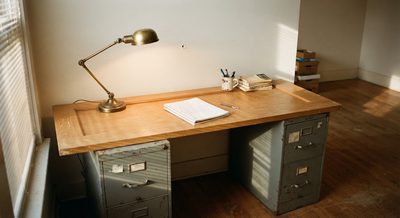
Shared spaces benefit from mobile storage. A locking file cabinet on casters can roll under a console or move beside the desk during the workday. Choose one with a finished top if it will remain visible in a living room. In a guest room, a fold-down wall desk can work, but the hinges and wall anchors deserve more attention than the decorative panel.
The best high quality home office furniture for a small room is furniture that earns its footprint. A cabinet that doubles as a printer stand or a desk with a modest return can outperform a larger piece with empty surface area.
A buying process that protects your budget
Set a total budget before browsing. For a dependable setup, a realistic starting range is $600 to $1,200 for a desk, basic ergonomic chair, monitor stand, and cable management. A premium sit-stand base or professional chair can push the total above $2,000, but you do not need to upgrade every component at once.
Spend first on the item that causes discomfort or limits your work. If your current desk wobbles, replace the desk. If the surface is fine but your back hurts, improve the chair. If the room feels cramped, solve layout and storage before buying a larger workstation.
Read assembly instructions before ordering. Look for panel thickness, maximum load, adjustment range, warranty length, and replacement-part availability. Reviews are useful for finding recurring problems such as stripped inserts, noisy motors, or drawers that arrive misaligned, but separate shipping damage from a design flaw.
High quality home office furniture should make tomorrow’s work easier, not simply make today’s room look finished. Measure the space, identify the work you perform, and buy the structural features first. That approach gives you a reliable office now and a clear upgrade path later.