
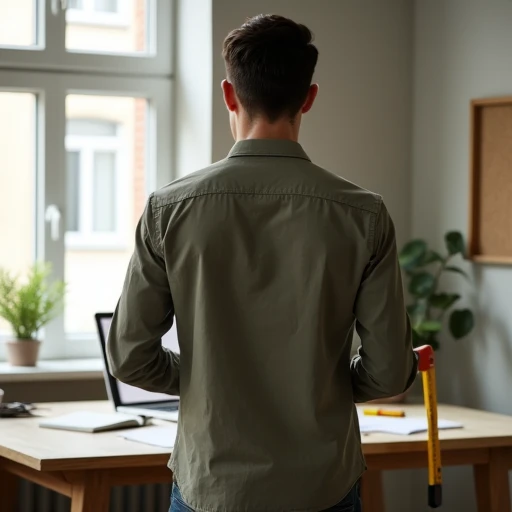
The best home office storage ideas for small spaces begin with a measurement, not a shopping cart. A 10-by-11-foot spare bedroom, a 48-inch-wide wall, and a corner beside the living room sofa each need a different storage strategy. The goal is not to make the room look like a showroom. It is to keep your monitor, files, cables, tools, and daily supplies within reach without giving up the floor area your chair needs.
Start with the desk footprint
Measure the desk, chair, and clearance as one working zone. A compact desk might be 42 to 48 inches wide and 20 to 24 inches deep. That is enough for a laptop, monitor arm, keyboard, and writing surface, but only if storage does not consume the space beside it. Leave at least 30 inches behind the chair for comfortable movement; 36 inches is better when the office is also a passageway.
I generally avoid putting a deep bookcase directly beside a desk. A 12-inch-deep shelf can still feel bulky when it creates a narrow tunnel between the work surface and a wall. Instead, use a 10-inch shelf above the desk for light items and place heavier equipment in a cabinet elsewhere. Weight matters: paper, binders, and printer supplies can easily turn a decorative shelf into a sagging shelf.
Before buying, tape the proposed furniture outline on the floor. Sit in the chair, pull it back, open the closet door, and walk past the setup. This five-minute test catches more problems than a polished online room planner.

Use the wall before the floor
Vertical storage is usually the highest-return move in a small office. A wall-mounted cabinet or adjustable shelf system uses the 18 to 30 inches above the desk that would otherwise be empty. Keep the lowest shelf at least 18 inches above the work surface so a monitor, task light, or raised laptop stand still fits comfortably.
For home office storage ideas for small spaces, I like a combination of one closed cabinet and one open shelf. The open shelf holds items you use every day, such as a notebook, headset, or reference book. The cabinet hides printer paper, tax records, cables, and the visual clutter that makes a small room feel smaller. A 30-inch-wide wall cabinet with adjustable shelves can provide meaningful capacity without requiring a full bookcase.
Check the wall before installation. Drywall anchors are suitable for light loads, but a cabinet loaded with books should be fastened into studs or installed with an appropriate mounting rail. A mounting rail is a horizontal metal track that spreads the cabinet’s weight across several attachment points. It costs more than a few basic screws, but it makes leveling and future removal much easier.
Make awkward corners earn their space
A corner does not automatically need a corner desk. Many corner desks have large triangular tops that look efficient but consume more floor area than a straight 48-inch desk. A better arrangement is often a narrow desk on one wall and a 12-inch-deep tower shelf on the adjacent wall. The two pieces create storage without forcing your chair into the corner.
A closet office can work with a 20- to 24-inch-deep desktop installed between side walls. Use a cord grommet near the back edge and keep the desktop removable if the room may need to return to bedroom use. For a reach-in closet, reserve the upper shelf for infrequently used supplies and add a small rolling drawer unit below. When work is finished, a curtain or pair of doors can hide the setup without pretending the closet is a full-size office.
In a shared living space, rolling storage is more useful than a permanent wall system. A 15-inch-wide cabinet on locking casters can hold a laptop dock, notebooks, and a small printer. Roll it beside the desk during work and toward a wall afterward. Locking casters matter because a cabinet that moves whenever you open a drawer becomes irritating quickly.

Choose storage hardware that survives daily use
Look past the finish and inspect the operating parts. Full-extension drawer slides let the drawer come all the way forward, so you can reach supplies at the back instead of digging through a dark box. Ball-bearing slides are typically smoother and more durable than basic roller slides, especially when a drawer carries paper or tools. For a file drawer, check whether it accepts standard letter-size folders without forcing them sideways.
Particleboard is not automatically a bad material. A well-sealed, 3/4-inch panel with a durable edge band can perform well in a home office. The weak points are usually thin backs, poor screw retention, and unsupported shelves. Look for a back panel that is captured in a groove or securely fastened, shelves with a center support when they span more than about 30 inches, and adjustable feet that prevent wobbling on an uneven floor.
This is also where a cheaper option can be smarter. A basic metal filing cabinet from a reputable office supplier may outlast a fashionable laminate pedestal, especially if you need to store heavy folders. Spend on drawer hardware and stability, not merely on a walnut-look finish.
Organize by frequency, not category
The most efficient home office storage ideas for small spaces put the most-used items between shoulder and hip height. Keep pens, charging cables, and your current notebook in the top drawer or an open tray. Put paper, spare cables, and printer cartridges in the next zone. Archive files and seasonal equipment can go on a high shelf, in a closet, or in a labeled storage bin.
Use containers that match the furniture. A 10-inch-deep shelf needs bins no deeper than about 9 inches, leaving enough room to remove them. Label the front rather than the top so you can identify contents while standing. For cables, use small fabric bins or a divided drawer insert instead of one large box. One tangled box turns a minor task into a thirty-minute search.
Keep a clear landing area near the desk. Even a 12-by-18-inch section of shelf can hold mail, receipts, or a notebook before they are sorted. Without that landing zone, papers migrate across the desktop and eventually block the keyboard.
A practical buying plan
Start with the item that is causing the daily failure. If the desk is covered with paper, buy a drawer unit or a vertical file. If cables are everywhere, add a cable tray and one small parts bin before buying a bookcase. If the chair cannot move, reduce furniture depth before adding capacity.
For a modest budget, plan roughly $60 to $120 for a rolling drawer unit, $40 to $150 for a sturdy wall shelf, and $150 to $400 for a well-built storage cabinet. Prices change, but the shopping logic stays consistent: measure the footprint, verify the load, inspect the hardware, and confirm that the piece can be returned if it does not fit.
The strongest home office storage ideas for small spaces do not depend on owning more furniture. They depend on assigning every item a reachable location and protecting the clearance your body needs to work. Measure first, build upward, close away visual clutter, and let your daily workflow decide what earns prime space.