The Inventory Most People Skip
Before I spec'd a single shelf for a product line, my team ran an inventory study. We asked home-office users to empty every drawer, shelf, and pile onto the floor and sort it into categories. The results were humbling: most people owned 40% more "reference material" than they estimated, and nearly everyone had a category they called "stuff I don't know where to put."
Storage isn't about capacity. It's about retrieval speed and visual noise. The right piece for you depends entirely on what you store, how often you touch it, and whether seeing it helps or distracts you.
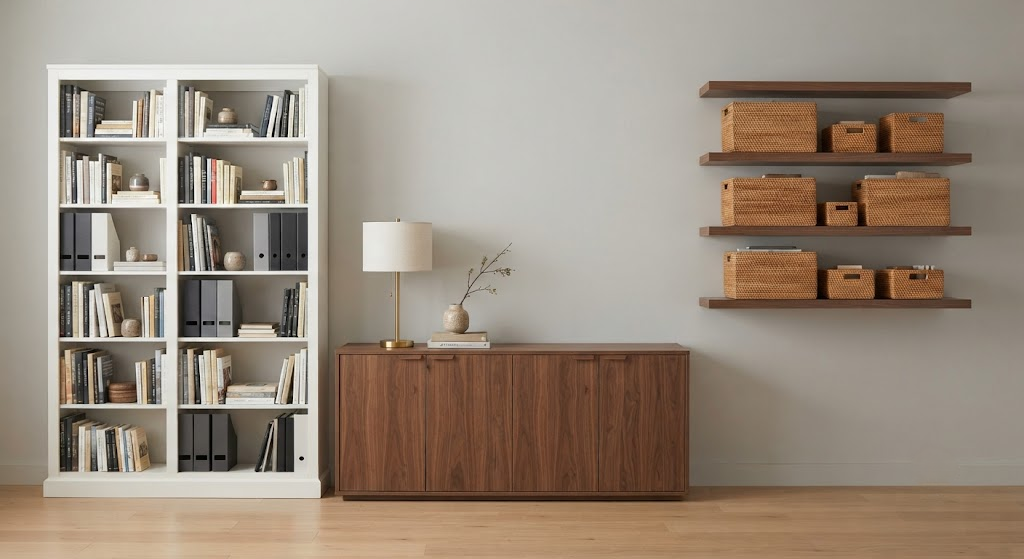
1. The Bookshelf: Open, Accessible, and Completely Honest
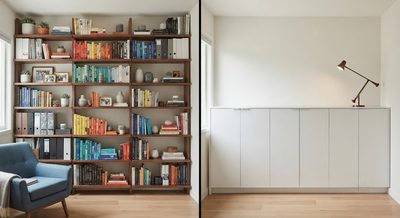
A bookshelf works when you need to grab items mid-task without opening a door. It works against you when those items are visually chaotic — mismatched binders, old router boxes, a stack of warranty cards you're "keeping just in case."
When a Bookshelf Wins
You reference physical books weekly. You have a collection of binders, journals, or sample books that you pull during meetings or creative work. You're disciplined enough to maintain visual order, or you don't care about it. A good bookshelf makes everything visible. That visibility is either a feature or a liability — there's no middle ground.
The product-manager detail to watch: shelf depth. Standard bookshelves are 10 to 12 inches deep. That fits books and binders perfectly but leaves an awkward gap if you try to store office supplies in boxes. If part of your storage is small items, look for a bookshelf with at least one adjustable shelf set at 8 inches of clearance — it'll hold bins without wasting vertical space.
2. The Credenza: What You Hide Improves Focus
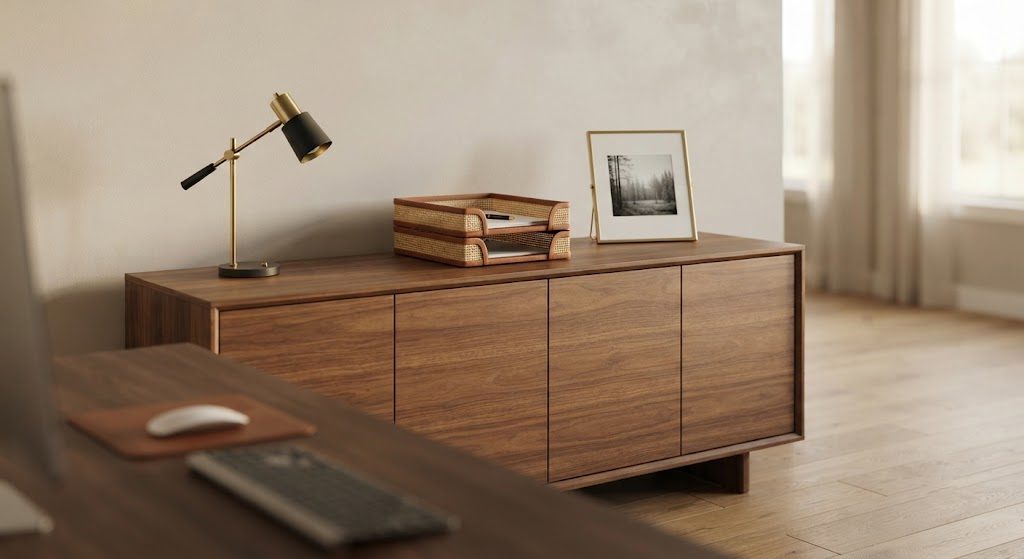
A credenza is a long, low cabinet — usually 24 to 30 inches tall and 15 to 20 inches deep. It's the most underrated piece in home-office storage because it performs two jobs simultaneously: it hides what you don't want to see, and its top surface becomes a secondary workspace or display area.
When a Credenza Wins
You store tech accessories, printer paper, archived files, shipping supplies, or anything that creates visual clutter. You want a clean horizontal surface behind or beside your desk for a task lamp, a plant, or a secondary monitor zone. Your workflow requires you to stash things quickly at the end of the day and restore order in under a minute.
The spec-sheet check: door hinges. Soft-close hinges add cost but prevent the cabinet from becoming the loudest thing in your office during a video call. If the credenza has sliding doors instead of hinged, check the track material — plastic tracks on a cheap unit will bind within a year.
3. The Wall Unit: Vertical Thinking for Small Rooms
A wall-mounted unit combines open shelving and closed cabinets in a single footprint that doesn't touch the floor. It's the storage solution for offices where floor space is already claimed by the desk and the chair path.
When a Wall Unit Wins
Your room is under 100 square feet. You need storage that doesn't interfere with a Murphy bed or a closet door swing. You're willing to mount into studs — wall units are not furniture you lean against drywall and hope for the best. The mounting rail must hit at least two studs, and the total loaded weight should never exceed the rail's rated capacity.
I'll add one product-manager caution: measure your available wall length before you fall in love with a unit. A 72-inch wall unit looks perfect in photos but may overlap a light switch or a window casing in your actual room by exactly 3 inches. That's the kind of detail that turns a Saturday installation into a drywall-patching project.
The Inventory Method: Do This Before You Buy Anything
Empty every storage item in your office onto the floor. Sort into four piles: daily access, weekly access, reference only, and archive. Daily access items belong in open shelving or top drawers. Weekly items can live behind credenza doors. Reference items go on the bookshelf's upper shelves. Archive goes in the hardest-to-reach spot. Match the furniture to the pile, not the other way around.