The fastest way to make a home office feel like yours is not another desk. It is a better match between the room, your workflow, and the furniture already there. These budget-friendly ways to personalize home office without new furniture focus on lighting, storage, cable control, and comfort. Most cost between $10 and $75, and several use items you may already own.
I approach this the way I evaluated office products: start with dimensions, identify the friction, then spend money only where it improves a daily task. A 10-by-11-foot spare bedroom needs a different solution from a desk in the corner of a living room. Measure the wall, desk depth, outlet locations, and walking clearance before buying anything. The goal is a functional workstation, not a pile of attractive accessories.
Start with a measured visual plan
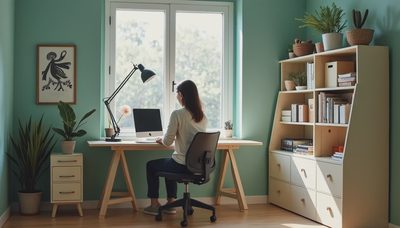
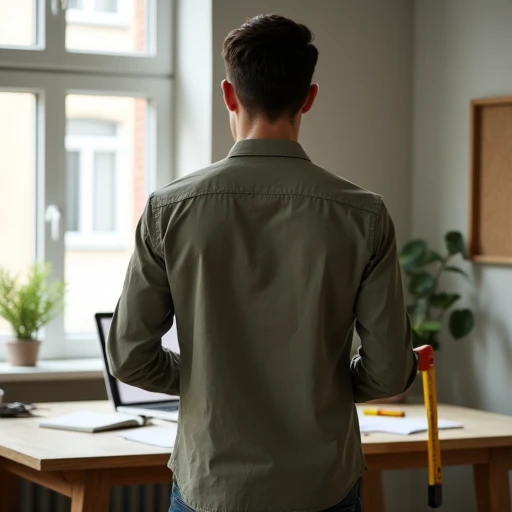
Before personalizing, clear everything from the desktop except the equipment you use every day. Measure the desk width and depth, then mark the active work zone with painter's tape. A monitor, keyboard, notebook, and drink usually need about 30 inches of width. If you use two monitors, allow closer to 42 inches. Keeping the remaining surface clear is one of the simplest budget-friendly ways to personalize home office without new furniture because it changes how the room works immediately.
For a 48-inch desk, reserve the center 30 inches for active work and use the corners for a lamp, speaker, or charging station. In a shared room, leave at least 30 inches for a walking path. A narrow 20-inch-deep desk can work, but wall storage becomes more useful than bulky desktop organizers. Take a phone photo from the doorway; it reveals visual clutter that is easy to miss while sitting down.
Change the lighting before the decor
Poor lighting makes an acceptable office feel unfinished. You can usually improve it without touching the furniture. Put a desk lamp on the opposite side of your writing hand to reduce shadows, and choose an adjustable arm that reaches at least 18 inches across the surface. A basic LED lamp with three color settings often costs $20 to $45. Use a neutral setting around 3500K to 4000K during work hours; very blue light can feel harsh, while warm light can make detailed tasks harder.
If the desk faces a window, rotate it 90 degrees when possible. Direct backlighting makes video calls difficult, and direct front light can create screen glare. A $15 sheer curtain can soften the problem without blocking daylight. For a closet office or dark corner, add an under-shelf light bar with adhesive mounting. This is a better investment than decorative string lights because it illuminates the keyboard and paperwork where your eyes need it.
These budget-friendly ways to personalize home office without new furniture work especially well in rentals. They create a deliberate lighting plan while leaving the desk, walls, and electrical fixtures intact.
Use the walls as a second work surface
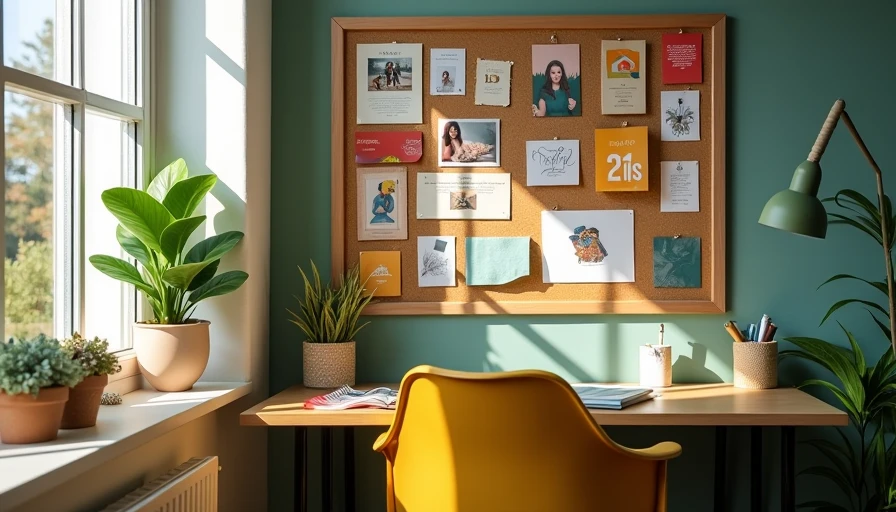
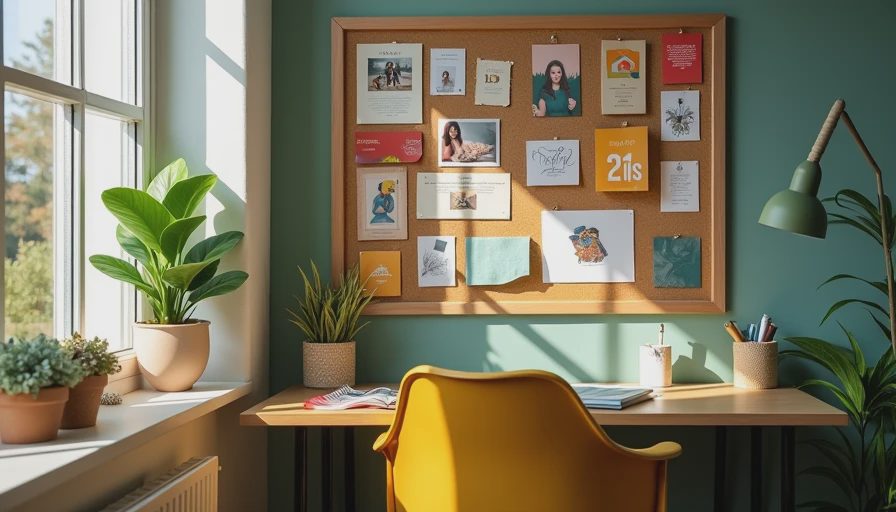
When floor space is limited, the wall should carry information instead of the desktop. A 24-by-36-inch corkboard above the desk can hold a weekly plan, reference notes, and one calendar. Keep the center area visible and limit it to current projects. A crowded board becomes wallpaper, not a tool.
For heavier items, use a freestanding ladder shelf or a properly installed wall shelf, but check the wall material and hardware rating first. A shelf holding books can weigh 40 pounds or more. In drywall, use anchors rated above the expected load; for a rental, removable picture ledges are better for lightweight notebooks and prints. Two $18 ledges can create a cleaner display than a large bookcase and preserve valuable floor clearance.
Personalization comes from choosing what belongs in reach. Put frequently used items between shoulder and waist height, archive supplies higher, and keep rarely used equipment in a labeled box. This arrangement is one of the most practical budget-friendly ways to personalize home office without new furniture because storage changes the workflow rather than merely filling a blank wall.
Make cables look intentional
Cable mess is usually a routing problem, not a furniture problem. Start by unplugging everything and labeling each cable with small masking-tape flags. Group power cables separately from monitor and data cables when possible. Attach a $12 cable tray under the rear edge of the desk, or use adhesive clips spaced every 8 to 10 inches along the underside. Leave a small service loop so equipment can move without pulling on the connectors.
A power strip mounted under the desk keeps chargers off the floor. Choose one with enough outlets for the monitor, computer, lamp, and accessories, then avoid stacking power strips. A fabric cable sleeve can hide several cords running from the desk to the wall, but do not enclose warm power bricks in a tight bundle. Keep ventilation around adapters.
Use a different color of hook-and-loop strap for each device group. Black can identify computer cables, blue can identify audio, and red can identify charging. This small system saves time when something fails and supports budget-friendly ways to personalize home office without new furniture by making the existing setup easier to maintain.

Add comfort with reversible upgrades
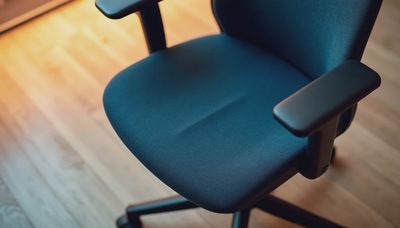
Comfort depends more on contact points than decoration. If your chair feels too low, test a firm seat cushion before replacing it. A 2-inch cushion should compress slightly without forcing your knees above your hips. If the chair is too high for the desk, raise the monitor and use a footrest rather than hunching your shoulders. A $25 adjustable footrest or even a stable wooden box can correct the angle, provided it cannot slide.
Your monitor's top edge should sit near eye level, with the screen roughly an arm's length away. A monitor riser made from a sturdy shelf board and two matching supports can cost less than $20. Confirm that the supports do not block the stand or ventilation. For a laptop, use an inexpensive stand and add an external keyboard so the screen and hands can occupy healthier positions.
A washable desk mat can define the workstation and protect a laminate or veneer surface. Look for a mat at least 24 inches wide, with a non-slip backing that will not leave residue. These budget-friendly ways to personalize home office without new furniture improve the parts of the room you touch for eight hours, which is where the return is highest.
Personalize with a controlled color system
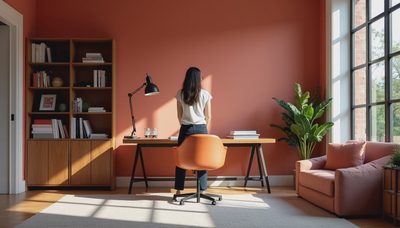
Choose one base color already present in the room, one functional accent, and one material. For example, a white desk can take charcoal accessories, green plants, and natural cork. A walnut-toned surface pairs well with black metal and cream textiles. Limiting the palette to three elements keeps a small office from looking assembled at random.
Use removable items first: a framed print, a desk mat, a small plant, or a fabric pinboard. A 4-inch nursery pot fits on many desks without taking over the active zone. If the room is shared, place personal color and artwork above your work area rather than across the entire wall. That establishes ownership without making the space harder for someone else to use.
This is where budget-friendly ways to personalize home office without new furniture should feel personal rather than generic. Display a project sketch, a map from a favorite trip, or a small object with a useful story. Just keep the display outside the reach zone so sentiment does not become clutter.
A practical weekend reset
Set aside two hours and complete the work in order. First, remove anything unrelated to current work. Second, measure and photograph the room. Third, fix the light and monitor height. Fourth, route cables and relocate the power strip. Fifth, create one wall storage zone. Finish by adding only two or three personal objects.
Give the setup a week before buying more. Notice whether you reach for supplies, fight screen glare, or move the lamp repeatedly. Those observations tell you more than an online shopping list. A $15 adjustment that solves a daily annoyance is smarter than a $150 accessory that simply matches the room.
The best budget-friendly ways to personalize home office without new furniture make the existing pieces perform better. Start with the task that irritates you most, spend against a measured problem, and let the personality come from choices that support how you actually work.