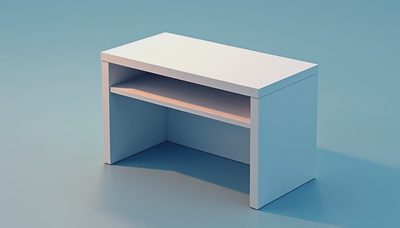


If you work from home 30 or more hours a week, quality office furniture for the home is not a decoration upgrade. It is work equipment. The wrong desk wobbles during video calls, the wrong chair leaves you shifting by lunchtime, and shallow storage turns every surface into a paper pile. I have managed home-office furniture categories and tested enough desk constructions to know that price alone tells you very little.
The useful question is simpler: will this piece support your workflow for several years? Look at dimensions, load capacity, materials, hardware, and warranty before you look at the finish. A $350 desk with a rigid steel frame and replaceable feet can be a better buy than a $900 design made from thin particleboard with a decorative side panel.
Start with the work surface
For a primary workstation, I usually start at 48 inches wide by 24 inches deep. That gives a laptop, 27-inch monitor, keyboard, mouse, and notebook enough room without swallowing a small room. If you use two monitors or spread out product samples, 60 by 30 inches is more comfortable. Anything less than 20 inches deep tends to push the screen too close and leaves no useful writing area.
Quality office furniture for the home should also match your equipment. A solid desktop does not need to be hardwood, but it should resist flexing. Medium-density fiberboard, or MDF, is a dense engineered wood that can provide a smooth, stable surface when it is at least about one inch thick. Particleboard can work at a lower price, but inspect the edge treatment and fasteners. A thin top with cam-lock connectors is more likely to loosen after repeated moves.
For sit-stand desks, check the frame rather than trusting the motor count on the box. A two-stage frame is adequate for many users, while a three-stage frame offers a wider height range. The desk should remain stable at its highest setting, especially with a monitor arm attached. A 55-inch desk that shakes at standing height is not an upgrade; it is an expensive distraction.
Cable management is another practical detail. Look for a rear channel, a modest cable tray, and at least one grommet positioned where your monitor and power strip actually sit. A built-in USB port is convenient, but it should not determine the purchase. Power adapters fail; a replaceable desktop cable tray keeps working.
The chair and the hours it has to survive
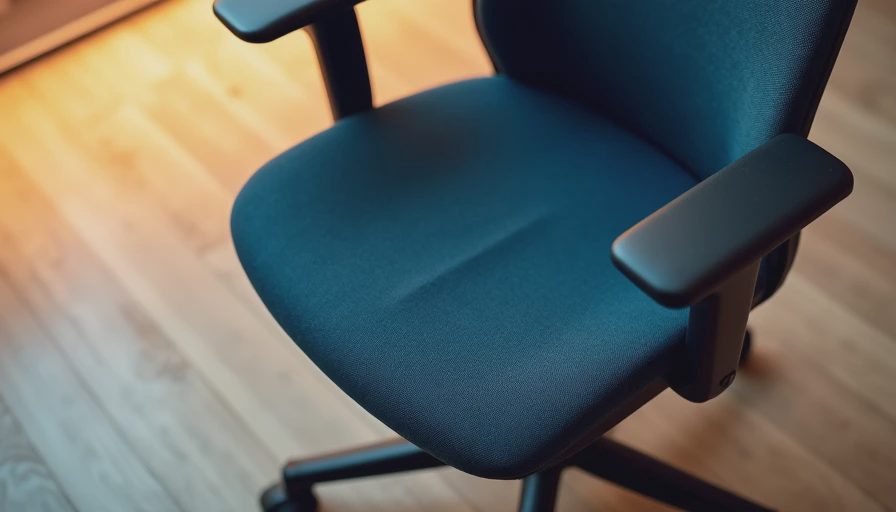
A chair supporting eight hours of work needs adjustability in the places that affect posture: seat height, seat depth, back tension, and arm height. Seat depth matters because a seat that is too long presses behind the knees, while a short seat leaves the thighs unsupported. Most adults need roughly 17 to 19 inches of usable seat depth, but the correct setting depends on the person.
Mesh can be a sensible choice in a warm room because air moves through the back. Upholstered foam feels more substantial and can be quieter, but low-density foam compresses quickly. Ask whether the cushion uses molded foam or a simple cut slab. Molded foam generally holds its shape better because it is formed under controlled pressure rather than cut from a larger block.
I would spend more on a chair mechanism than on polished trim. A synchronized tilt mechanism lets the seat and back move together, while basic tilt often feels like a hinge. Brands such as Steelcase and Herman Miller are known for extensive adjustment systems, but a midpriced chair from a reputable office supplier can serve just as well if its controls are reachable and replacement parts are available. Quality office furniture for the home does not require the most famous logo; it requires a chair you can tune to your body.
Storage that earns its footprint
Storage should be planned around the objects you use, not the empty wall. A two-drawer mobile pedestal usually needs about 20 inches of width and 22 inches of depth, including clearance for the drawer pull. It can fit under a desk when you need to reclaim floor space. For files, confirm whether the drawers accept letter-size folders without forcing them sideways. A cabinet that looks compact may waste capacity through thick internal rails.
Open shelving is useful for active reference books, shipping supplies, and equipment you reach weekly. Closed doors are better for visual calm and dust control. For a 10-by-11-foot office, a 30-inch-wide bookcase on one wall often provides enough capacity without making the room feel boxed in. Anchor tall units to the wall, especially in a shared home where children or pets may enter.
Quality office furniture for the home should use hardware that can tolerate adjustment. Full-extension drawer slides let the drawer open nearly all the way, making rear storage usable. Soft-close slides reduce impact but are not automatically stronger. Check the stated drawer load, the thickness of the back panel, and whether shelves use metal pins rather than molded plastic supports.

Plan the room before ordering
Measure the room in inches, including baseboards, radiators, doors, and window trim. A desk placed 30 inches from a wall leaves a workable passage, but a chair needs more than the desk depth alone. Allow roughly 36 inches behind a seated worker if someone must walk past during a call. For a corner setup, a 48-inch desk on one wall and a 36-inch return can create an L shape without requiring a dedicated 12-by-12 room.
In a shared bedroom or living room, use a 42-to-48-inch desk with a shallow 20-to-24-inch depth. Put a rolling pedestal underneath and choose a monitor arm that folds close to the wall after work. A closet office can work with a 20-inch-deep top, but ventilation and lighting matter. Do not block the return-air grille, and use a task lamp with a diffuser rather than relying on a bright ceiling fixture.
Before buying quality office furniture for the home, tape the footprint on the floor. Put a cardboard box at the intended desk height and sit there for 20 minutes. This catches problems that a product photograph hides, including a door that cannot open fully or a chair that strikes a nearby cabinet.
A product-manager inspection checklist
When I evaluate quality office furniture for the home, I start with the underside and rear panels. Look for a finished back if the desk will float in a room, a sealed edge where spills can reach the top, and threaded inserts rather than screws driven directly into soft material. Threaded inserts give fasteners a more durable anchor and are easier to tighten after moving.
Ask what arrives assembled. A desk with one-piece side panels may be sturdier, but it can be difficult to carry upstairs. Confirm the packed dimensions, total weight, and return procedure before ordering. A $100 freight return can erase the apparent savings of a bargain.
The warranty also tells you how the maker expects the product to perform. One year is common for budget furniture; longer coverage on the frame, finish, or lifting mechanism shows where the manufacturer has confidence. Save the assembly instructions and spare hardware in a labeled envelope. That small habit matters after a move.
Spend where failure is expensive
Put your budget toward the parts that receive constant stress: the chair mechanism, desk frame, drawer slides, and adjustable monitor support. Save on decorative shelves, cable sleeves, and surface color if the cheaper option has the same dimensions and construction. A sensible complete setup might cost $700 to $1,500: approximately $250 to $700 for a chair, $250 to $650 for a desk, and the rest for lighting and storage.
The best quality office furniture for the home is not necessarily a matching suite. It is a coordinated set of pieces that fits the room, supports your body, and keeps daily tools within reach. Measure first, inspect the construction, and test the layout with tape before placing the order. That process is less glamorous than shopping by finish, but it is how you avoid buying the wrong desk twice.