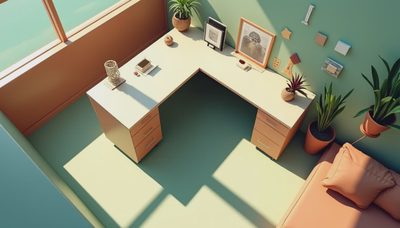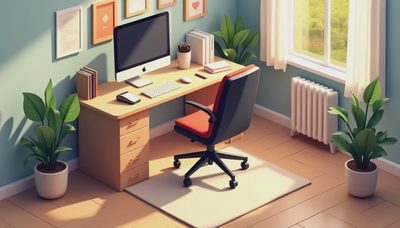


Small home office layout works when you treat the room like a machine, not a mood board. I spend a lot of time looking at rooms where the owner bought a desk first, then tried to force the rest of the furniture around it. That usually leaves no aisle, no cable path, and no place to put paper. The fix is simple: measure the room, decide how you sit, and buy the least amount of furniture that still lets you work eight hours without stacking books on the floor.
A small home office layout starts with the room, not the desk
Start with the walls, the door swing, the window, the return vent, and any closet opening. Then subtract the space your chair needs to move. In most rooms, 36 inches is a comfortable main aisle and 24 inches behind the chair keeps the setup from feeling trapped. If you only have an 8x10 spare room, that does not mean you are stuck; it means the furniture has to earn its footprint. A desk on the long wall, a narrow shelf on the opposite side, and one clear path to the door will usually beat a prettier but tighter arrangement. That is the basic rule behind a small home office layout that works all day instead of just looking tidy in photos.
If the room is a closet conversion, get serious about depth. A 24-inch-deep desktop is enough for a laptop and monitor arm. A 30-inch depth gives you room for a notebook, a coffee mug, and actual wrist support. The difference is only six inches, but those six inches decide whether you can type without your elbows fighting the wall.
Pick the desk size before you buy anything else
In a small home office layout, the desk is the anchor, so width matters more than fancy trim. A 48-inch desk is fine for one laptop and one monitor. A 60-inch desk is the safer buy if you use dual screens, a notebook stand, or a printer on the same surface. Most budget desks in laminate or engineered wood land around $150 to $400. Sit-stand desks usually start closer to $500 and can run past $1,000 once you add a stronger frame and better controls. That higher price buys lift capacity, stability, and fewer wobble complaints later.
For most buyers, a steel frame with a laminate top is the smart compromise. IKEA, HON, Bush Business Furniture, Vari, and FlexiSpot all sell versions of that formula. You do not need solid hardwood to get a room that functions. You need a top that does not sag, legs that do not twist, and a warranty that makes sense for how hard you work. If the desk takes over the room, it is too big. If it feels like a school desk, it is too small.

Storage that earns its floor space
Storage is where a lot of rooms go wrong. People buy a deep cabinet because it looks substantial, then lose half the floor. A 12-inch-deep bookcase usually carries more office value than a 24-inch-deep boxy cabinet because it keeps the walking path open. Use the deeper piece only when you need hanging files, bulky supplies, or a printer that cannot live anywhere else. If you do keep paper, look for full-extension drawer slides so the drawer opens all the way. Cheap slides that stick are annoying on day one and broken by year three.
A wall shelf above the desk can also do a lot of work, but leave enough clearance so you do not hit your knuckles every time you stand up. I like shelves mounted high enough to clear a lamp and low enough that the top shelf is still reachable without a step stool. In practice, that usually means the first shelf starts around 15 to 18 inches above the desktop. If you need hidden storage, a small credenza with doors often looks cleaner than a tall cabinet and gives you a landing zone for a printer, paper, or a dock. This is the place to save money when the cheaper piece still uses decent hardware.
Light, power, and cables are part of the furniture plan
A room can have the right desk and still feel bad if the power and light are wrong. Put your primary light source where it does not throw glare across the monitor. If the window is behind you, you will fight reflections. If it is to the side, you usually get better daylight and less eye strain. A task lamp on the opposite side of your writing hand helps keep shadows off the page. That is a small detail, but it matters on long workdays.
For power, the cleanest move is a surge protector mounted under the desktop or inside a credenza, not a strip draped across the floor. A 10-foot cord often solves more problems than a second outlet. Add a cable tray or a simple basket under the desk, and the room stops looking improvised. This is also where monitor arms pay for themselves. They cost more than a basic stand, but they free up surface space and let you set a better eye level without stacking books under the screen. Those are not luxury upgrades; they are cleanup tools that make the rest of the room usable.
Three room sizes and what a small home office layout looks like in each
A 5x7 closet office needs ruthless editing. Use a 42 to 48 inch wide desk, a single shallow shelf, and a chair that tucks fully under the top. Skip the extra side table. A 6x8 nook can usually handle a 48-inch desk and one file cabinet, but not much more. An 8x10 room gives you real options: a 60-inch desk on one wall, a 12-inch-deep shelf opposite it, and enough clearance to open the door without bumping the chair. Once you reach 10x12, you can add a guest chair or a credenza without wrecking circulation.
The jump from cramped to comfortable is not dramatic furniture. It is one fewer thing on the floor and one smarter path through the room. That is why a small home office layout should be planned on graph paper or painter’s tape before you order anything else. Mark the desk footprint, open the door, pull the chair out, and see what is left.
Buy in this order if you want the room to work on day one
Start with the desk, then the chair, then storage, then lighting, then cable management. People usually do it backward and end up replacing the first two purchases within a year. If your budget is tight, put the money into the desk frame and chair before you spend on decorative shelving. A refurbished chair from a reputable brand can save a few hundred dollars, and a simple desk from a mainstream line often works better than a prettier one with weak hardware. I would rather see someone spend $350 on a solid desk and $150 on cables, trays, and a lamp than burn $500 on a desk with no plan for the rest of the room.
Once the basics are in place, you can add finish choices, art, and better storage as the room proves itself. That is what separates a room that looks finished from a small home office layout that keeps working after the novelty wears off.