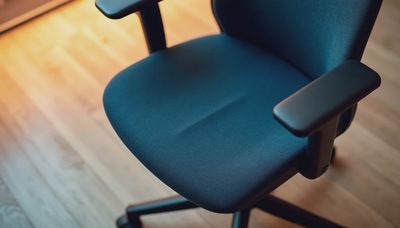


The best office chair is not necessarily the most expensive chair in a showroom. It is the one that fits your body, supports your working posture, and keeps its adjustments tight after years of daily use. If you work from home 30 or more hours a week, a $150 chair that leaves your hips sore is not a bargain. It is a short-term purchase you will replace twice.
I have spent enough time around office furniture factories and product spec sheets to know where the money goes. A reliable chair needs a stable base, a seat pan that does not collapse, usable adjustments, and a warranty that covers more than the first twelve months. Start there, then match the chair to your desk, room, and budget.
What makes the best office chair worth buying
Fit comes before features. Your feet should rest flat on the floor, with your knees roughly level with your hips. When you sit all the way back, the seat should support your thighs without pressing sharply behind your knees. Most adults need a seat depth between about 17 and 19 inches, though shorter users often do better with a shallower seat.
Lumbar support is useful when it moves with you rather than acting like a hard lump in your lower back. Look for height adjustment and, ideally, depth adjustment. A backrest that tilts and locks in several positions is more practical than one that simply reclines dramatically. You should be able to lean back during a video call without losing contact with the support zone.
Armrests deserve similar attention. Adjustable height is the baseline; width, depth, and pivot adjustments are helpful if you switch between typing, writing, and using a mouse. Armrests should let your shoulders relax, not force them upward. If the chair cannot slide close enough to your desk because the arms are fixed, a premium-looking design becomes a daily nuisance.
The best office chair also needs a seat height that works with your desk. Standard desks are often around 29 to 30 inches high, which can be too tall for a shorter user even when the chair is adjusted correctly. A footrest can solve that mismatch more cheaply than replacing the desk, but measure before ordering.

Materials and construction that survive daily use
The frame and mechanism matter more than the color of the upholstery. A five-star aluminum base usually resists cracking and flex better than a thin plastic base, but a well-designed reinforced nylon base can still perform reliably. Check the weight rating, caster size, and warranty language instead of assuming a metal component automatically means better quality.
The tilt mechanism is the chair's working engine. A synchronized mechanism lets the seat and back move together, usually keeping your feet more stable as you recline. A basic tilt lock can be perfectly adequate if you prefer an upright posture, but it should engage cleanly without grinding or excessive side-to-side movement.
Mesh stays cooler in a warm room and is easy to inspect for sagging. Good mesh has consistent tension across the back and a frame that does not create pressure points. Fabric feels warmer and often gives the seat a softer first impression. Bonded leather can look polished at a low price, but its surface commonly peels before the underlying structure wears out. For a chair used eight hours a day, breathable mesh or durable woven fabric is usually the safer specification.
The best office chair should also have serviceable casters and a replaceable gas lift. These parts take constant stress. A chair with ordinary two-inch casters may roll poorly on thick carpet, while larger rollerblade-style casters can move more easily but may travel too freely on hard floors. Use a floor mat when needed; it protects both the flooring and the caster path.
Matching the chair to your workspace
A dedicated 10-by-11-foot office gives you room to prioritize comfort, but many remote workers are fitting a workstation into a bedroom corner or a shared dining area. Measure the chair at full recline, not just the footprint shown in the product listing. Leave at least 30 inches behind the backrest if you want to recline comfortably, and reserve roughly 36 inches of clear space in front of the desk for pulling out the chair.
For a closet office, choose a chair with arms that fit below the desktop or a seat that can tuck completely under it. In a shared room, a compact 24- to 26-inch-wide model is easier to move aside than a broad executive chair. A five-foot desk can accommodate two monitors, but only if the chair can roll straight back without hitting a cabinet or wall.
Before buying the best office chair for a small room, mark its maximum dimensions with painter's tape. Include the base, not only the seat width. This simple test catches the common mistake of ordering a chair that technically fits the desk but blocks a door, drawer, or closet opening.
Price tiers and where to spend your money
Below about $200, expect compromises. You can find a useful task chair in this range, especially from brands such as Staples' house lines, IKEA, or HON, but inspect the seat foam and adjustment range carefully. These chairs can work well for part-time use or a temporary setup. They are less convincing when used every weekday for several years.
From roughly $300 to $700, the selection improves substantially. You can find stronger mechanisms, better lumbar adjustment, quieter casters, and warranties that cover more components. Models from Branch, Steelcase, and HON occupy different points in this range, so compare the actual specifications rather than buying based on brand recognition alone.
Above $1,000, you are usually paying for refined ergonomics, durable materials, repair access, and long-term testing. Herman Miller and Steelcase chairs are common examples, but their value depends on fit. A used, professionally inspected high-end chair can be smarter than a new chair with flashy styling and weak support. Avoid paying for a headrest, polished shell, or racing-style shape if the seat and back adjustments are poor.
The best office chair for your budget is the one that puts money into the parts you use constantly: the mechanism, seat foam, lumbar system, and base. A ten-year frame warranty matters more than decorative stitching.
A practical testing checklist
When possible, sit in a chair for at least 15 minutes. Adjust the seat height, seat depth, lumbar position, recline tension, and arms before judging it. Type for several minutes with your elbows near 90 degrees. Then lean back, reach for a mouse, and check whether the chair still supports you without forcing your shoulders forward.
Inspect the underside for loose cables, exposed edges, and thin plastic around the mechanism. Roll across the floor in several directions. Listen for clicks and creaks, because noise often becomes more noticeable after months of use. Ask about return shipping, restocking fees, and whether the warranty covers normal commercial-style daily use in a home office.
If you are shopping online, measure your current chair and write down what bothers you. “Uncomfortable” is too vague. “Seat edge presses behind my knees” points toward a shorter seat depth. “Shoulders tighten by lunch” suggests armrests or desk height are wrong. Those observations make product comparisons much more useful.
Final buying guidance
The best office chair should disappear into your workday. You should notice when an adjustment is needed, but you should not spend every afternoon shifting around to escape pressure points. Prioritize fit, a credible tilt mechanism, durable seat materials, adjustable lumbar support, and a warranty with clear terms.
For a tight budget, buy a straightforward task chair and add a footrest or floor mat before spending on cosmetic upgrades. For a full-time home office, consider the $300-to-$700 range first, then compare return policies and replacement-part support. If a retailer offers a meaningful trial period, use it at your real desk with your real monitor height. The best office chair in a showroom can feel wrong after four hours at home.
Measure the room, measure the desk, and measure yourself. That process is less glamorous than choosing a color, but it is what turns an office chair into equipment you can trust every morning.