If you are looking for small home office storage ideas, start by ignoring the pretty desk photos and measuring the room. A lot of bad office furniture happens because people buy storage first and then hope the chair, printer, cables, and daily paper pile will somehow fit later. They will not. The better move is to treat the room like a work bay: every inch needs a job, and the storage has to support your actual routine, not an ideal version of it.
The good news is that small home office storage ideas do not require a custom built-in or a $4,000 cabinetry package. In a 9x10 bedroom, a closet, or even one wall of a living room, you can get organized with the right mix of shelves, drawers, bins, and a surface that gives you legroom. I have seen plenty of setups where a $120 wall shelf did more useful work than a fancy cabinet that ate half the floor.
Start With the Wall, Not the Floor
The easiest place to win back space is above desk height. A 12-inch-deep wall shelf can hold notebooks, printer paper, reference books, and a basket for chargers without crowding the floor. If the wall is drywall, use proper anchors and hit studs whenever you can. For a single shelf over a 48-inch desk, a 60-inch span usually looks balanced and gives you room for two or three storage zones instead of one cluttered line.
This is where small home office storage ideas pay off fast. A shallow shelf, a rail system, or a pegboard keeps the surface clear for the work you do every day. IKEA’s wall rails and Elfa-style tracks work because they are flexible, and that matters when your office also needs to hold a scanner one month and a label printer the next. If you rent, use a light-duty setup that screws into a couple of studs and avoid anything so deep it feels like overhead cabinetry in a kitchen.
A practical rule: keep wall storage 14 to 18 inches above the desktop so you do not hit it with your elbows or monitor arms. If you use dual 27-inch monitors, leave enough width to center the screen pair and still keep a supply basket on one side.
Use Furniture That Stores More Than One Thing
A desk with drawers is only useful if the drawers open fully and do not steal knee space. I like a 24-inch-deep desk for most people, with at least one file drawer or a shallow utility drawer on the side. File drawers make sense if you still keep paper records, but do not buy a two-drawer pedestal unless you truly use it. Too many compact desks trade storage for heavy framing that feels solid but leaves you nowhere to put a backpack or trash bin.
For small rooms, lateral furniture often beats tall furniture. A 30- to 36-inch-wide credenza can store printer paper, labels, office supplies, and a router, and the top can hold a printer or lamp. That is one of the most overlooked small home office storage ideas because it does double duty: hidden storage below, useful landing space on top. If you are shopping budget brands, Staples, Office Depot, and IKEA all have versions that work well enough if the drawer slides feel smooth and the back panel is not flimsy cardboard.
If you want a cheaper win, buy a simple desk and add a rolling file pedestal only when you need it. A decent metal pedestal with locking casters can run from about $90 to $180, and it gives you flexibility if the room layout changes later.
Treat Bins and Boxes Like Work Tools
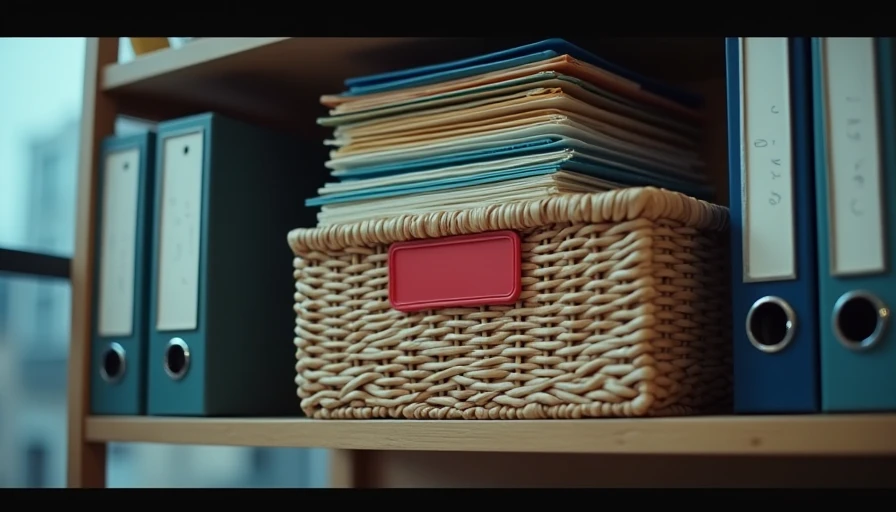
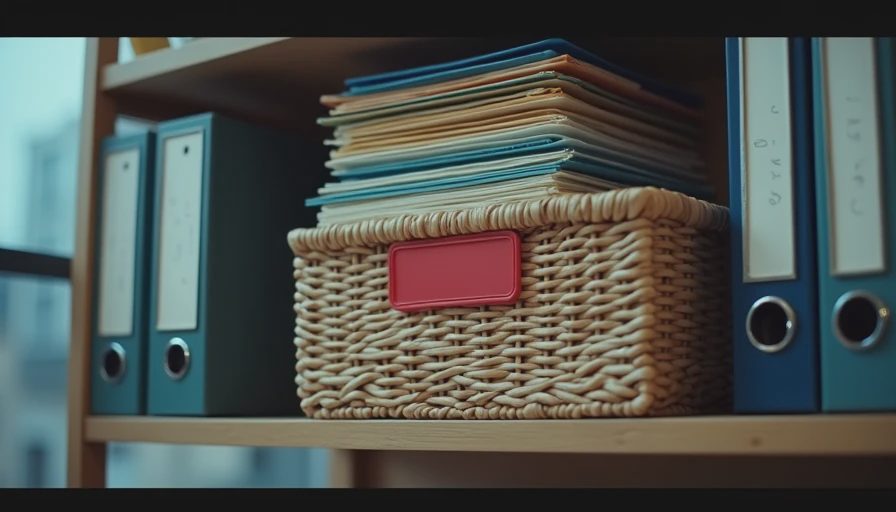
The fastest way to make a small office look messy is to stack random items in the open and call it storage. Use matching bins, and size them to the shelf, not the other way around. A 10-by-12-inch bin is perfect for cables, laptop stands, ink, and adapters. A lidded plastic file box works better than a decorative basket if you actually move paper around every week.
A lot of small home office storage ideas fail because they ignore category control. Put the same kind of item in the same container every time: one bin for tech, one for shipping supplies, one for spare notebooks, one for seasonal paperwork. Label the front if the bin lives behind a door or on a high shelf. Clear containers are useful when you want fast visual access, but opaque bins hide visual clutter better and usually look calmer in a room that also serves as a guest space.
If you do a lot of shipping or client work, keep a small staging tray near the desk for outgoing items. That keeps envelopes, returns, and packing slips from drifting across the room. It sounds minor, but this is usually where office clutter starts.
Make the Closet Do Real Work
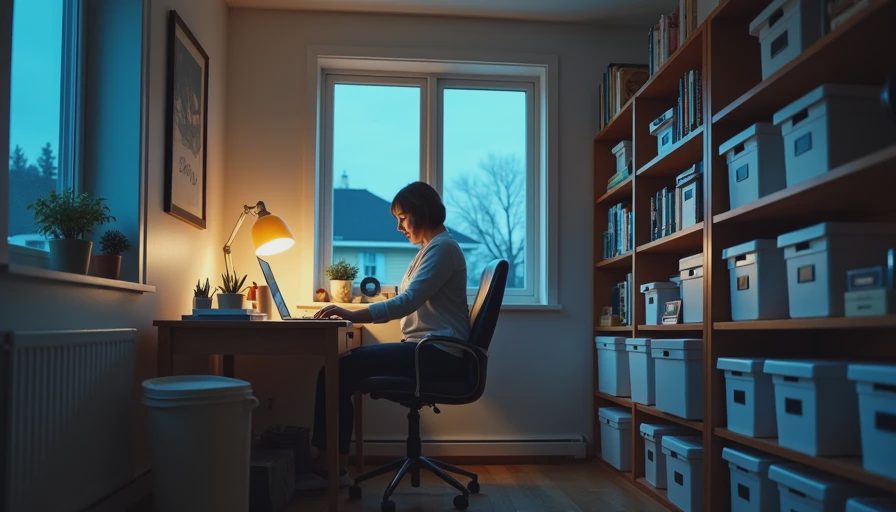
A closet office only works when it stays shallow and predictable. Remove the old wire shelf if it is in the wrong place, then install a real shelf at about 54 to 60 inches high for long-term storage. Below that, use a 20- to 24-inch-deep desk surface and keep the side spaces open for a task chair and a small file tower. In a 6-foot-wide closet, you can still fit a work surface if you avoid oversizing the base cabinet.
This is another place where small home office storage ideas need discipline. Use the top shelf for things you only touch once a month: spare ink, archived files, tax folders, or holiday cables. Put active supplies at arm level. If you need printer access, leave the printer on a pullout tray or a narrow cart so you are not lifting a 20-pound machine every day. Closet offices tend to fail when people cram in too much furniture and then wonder why the chair cannot roll.
If you want a clean look, paint the inside the same color as the room and use one task light inside the opening. That does more for the space than most decorative upgrades.
Build a Layout Before You Buy Anything
Here is the part most people skip. Measure the room, then draw the floor plan with three things marked: desk, chair clearance, and storage depth. In an 8x10 room, a 48-inch desk with a 30-inch-wide file pedestal and a 12-inch shelf can fit comfortably if you leave about 36 inches behind the chair. In a 10x11 room, you can usually add a bookcase or a small credenza without making the room feel crowded.
The best small home office storage ideas are the ones that match how you work. If you print a lot, prioritize a cabinet or credenza near the desk. If you live in documents and notebooks, prioritize drawers. If you work mostly digital, wall shelves and a shallow side cabinet are enough. I would rather see a room with one good desk, one sensible shelf, and one honest bin than a room full of mismatched storage that looks busy and works poorly.
If you are starting from scratch, buy in this order: desk, chair clearance, main storage, then accessories. That keeps you from spending money on the wrong category first. And if a piece only looks good in a staged photo but does not hold paper, cords, and daily tools, skip it.
The real test is simple: can you sit down, find what you need in under a minute, and clear the desktop at the end of the day? That is what small home office storage ideas are for, and that is usually the difference between a room that looks finished and one that actually helps you work.