

The Best Standing Desk for Home Office: What to Buy and What to Skip
After ten years managing home-office product lines at a Southeastern furniture brand and three desks built in my own garage shop, I have strong opinions about the best standing desk for home office. Most of what you see online is marketing-heavy. The good news is you don't need to spend a fortune to get a desk that stays stable, adjusts smoothly, and survives daily use. You just need to know what to look for.
What Makes a Standing Desk Worth the Money
A standing desk is three components in a trench coat: a desktop, two legs, and a controller. The legs matter more than the desktop. Look for a dual-motor frame with a lifting capacity around 300 pounds. Single-motor desks work fine for a basic laptop setup, but when you add a monitor arm, a desktop clamp, and a pair of bookshelf speakers, the extra motor keeps the desk from struggling near the top of its range.
Stability is the next thing to check. When the desk is raised to standing height, grab the front edge and give it a shake. If it wobbles, you will hate it within a week. A good frame uses thick steel columns, often measuring three inches square or more. Crossbars and telescoping legs add stiffness. The frame quality jumps around the $400 price point. That's where sheet metal becomes actual furniture.
This is why the best standing desk for home office use is never the cheapest one on the page. It's the one where the manufacturer spent money on the parts you can't see.

My Top Pick for Most Home Offices
If you want a single recommendation, start with the Uplift V2. It uses a dual-motor frame with a steel crossbar, and the company backs it with one of the better warranties in the category. I've tested it in my own workspace and it stays steady at standing height with a 34-inch ultrawide monitor clamped to the back. The keypad is simple, the desk remembers four presets, and the assembly takes 45 minutes with two people.
The Fully Jarvis and the Herman Miller Atlas are also solid, but they tend to cost more for the same capability. If you're on a smaller budget, a desk like the Flexispot E7 delivers most of the Uplift's performance for about two-thirds of the price. The difference shows in the finish details, not the day-to-day function.
Size, Shape, and the Corner Office Problem
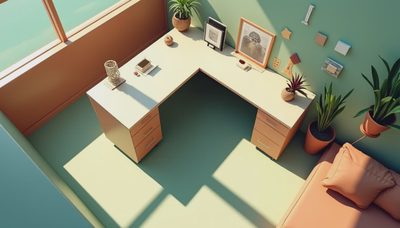
Most home offices don't need a corner desk, and for this guide to the best standing desk for home office, I recommend sticking with a rectangular or rounded-L shape. A rectangular top gives you the most usable surface for the floor space. If your room is 10 by 11 feet, a 60-by-30-inch desktop is a comfortable fit. If you're in a tight corner or a closet office, go with a 48-by-24-inch top. Keep a minimum depth of 24 inches; any less and a monitor arm plus keyboard tray will feel cramped.
If you truly need a corner desk, choose an L-shape with a rounded corner rather than a 90-degree angle. The rounded side keeps your body closer to the work surface without that hard vinyl edge digging into your forearm. Most corner desks are also heavier and harder to move, so measure your doorways before you commit.
What You Should Pay (and When to Skip)
You can find standing desks for $150, and you can find them for $2,500. The sweet spot for most people is $450 to $750. In that range, you get a dual-motor frame, a solid wood or commercial-grade laminate top, and a controller with preset heights. Below $300, you're usually getting a single-motor frame with a particleboard top, and you'll feel the trade-offs in stability. Above $1,000, you're paying for premium materials and design; sometimes that matters, often it doesn't.

If you're on a tight budget, the trick is to buy a solid desktop like a butcher-block countertop from a lumber yard and pair it with a separate standing desk frame from a brand like Uplift or Jarvis. That route can save you $100 to $200 and lets you choose the exact size you need.
Setting Up the Desk for a Full Workday
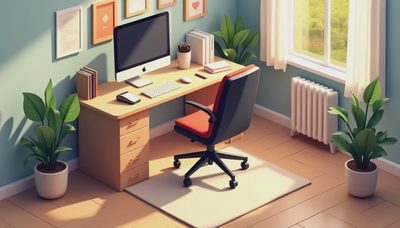
The best standing desk for home office layouts only works if your monitors, keyboard, and chair are aligned. Set the desk height so your elbows sit at a 90-degree angle when you're at the keyboard. When standing, the same position applies to your arms, and your monitor should be at eye level with the top of the screen just below your eye line. A monitor arm makes this easy, and it frees up valuable desktop space.
Don't forget cable management. A clean setup is a calmer setup. Run cables along the underside of the desktop with a cable tray, and use a power strip with a built-in surge protector. If your desk has a programmable controller, set at least two presets: one for sitting, one for standing. The more you use the presets, the more likely you are to alternate throughout the day.
A Quick Checklist Before You Click Buy
Before you order, check these five points. Aim for a lift capacity of at least 250 pounds if you'll mount monitors or shelves. Check the adjustable height range so the lowest position matches your seated elbow height plus about two inches for your keyboard. Look for at least two memory presets; they turn a standing desk from novelty to daily tool. Make sure the warranty covers the frame and motor, and that replacement parts are easy to find. Consider assembly: a desk that takes two hours to build will sit in its box, so look for pre-installed legs or simplified instructions.
That's the best standing desk for home office without overpaying.