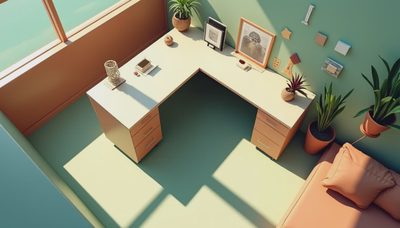

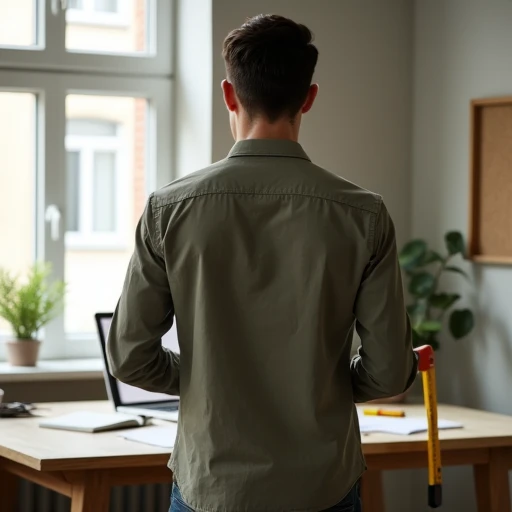
When people ask me for home office storage ideas, I usually start with the same blunt advice: clear the desktop until only the tools you use every day stay out. If your printer, paper stash, spare cables, notebooks, and mail are all competing for the same 60 inches of desk, the room is doing too much work. A good storage plan should make the desk feel bigger, not more decorated. In a 10-by-11 room, that usually means putting the heavy, boring stuff on the perimeter and keeping the working surface shallow, simple, and easy to reset at the end of the day.
Home office storage ideas that start with the desktop
The first job is sorting what has to live near your hands from what can move elsewhere. I use three buckets: daily, weekly, and archive. Daily items are the laptop dock, one notebook, pens, and a charger. Weekly items are printer paper, reference binders, and shipping supplies. Archive is anything you touch once a month or less. Once you sort it that way, the right storage starts to show itself. A 12-inch-deep shelf can hold binders without stealing much floor space. A 15-inch-wide pedestal can swallow cords and notebooks. A shallow drawer tray does more for workflow than another decorative bin ever will.
If the desktop is crowded, the easiest win is a paper landing zone. A vertical sorter, letter tray, or wall pocket keeps new mail from spreading across the room. I also like a small reset bin for the objects that migrate during the day: earbuds, a calculator, USB drives, and the one pen you actually trust. That setup costs less than a new desk and usually saves more time.

Build upward before you buy a bigger desk
Walls are cheaper than square footage, and they carry more than people think. If the room has studs you can hit, a pair of wall shelves or a mounted cabinet can free up an entire credenza. The trick is depth. Shelves deeper than 12 inches start to feel heavy in a small office, and anything above the eyeline should be lighter visually than the stuff below it. Keep the shelf under the desk light enough that it disappears when you sit down.
This is where modular systems earn their keep. A cube shelf can hold paper, bins, and a printer if you leave one bay open for ventilation. A wall rail system gives you flexibility if your work changes every year. I like that better than buying a giant bookcase on day one, because most people do not need 84-inch fixed storage. They need a place for the current project, a place for the bills, and a place for the extra monitor arm when the laptop is enough.
A cheaper shelf can be the smarter buy if it is square, stable, and easy to assemble. A fancy finish does nothing if the back panel bows or the holes strip out after a move.
Use the room, not just the wall
Small rooms usually fail because the furniture ignores traffic. In a 10-by-11 bedroom office, I want at least 30 inches of walking room where the door swings and 36 inches if two people need to pass through. That sounds generous until you put a chair, a file cabinet, and a printer cart in the same footprint. If the room is tight, a rolling cabinet under the desk often works better than a wide credenza, especially if the desk is 48 to 60 inches wide. Put the printer where you can reach it without standing up, but not where it steals your legroom.
Closets are a different game. A converted closet can become a solid workstation if you keep the depth honest. Most closet shelves are too shallow for serious storage, so I like a desktop around 24 inches deep and side storage no deeper than 18 inches. That leaves room for a chair to tuck in and for cables to run without pinching. If you can close the doors and hide the mess, even better. That is not a decorative trick; it is how a room stays usable on a Tuesday afternoon.
Home office storage ideas for closets and shared rooms
Shared spaces need a stricter rule: anything visible has to earn its keep. In a family room corner, that means one closed cabinet, one open shelf, and one hard limit on surface clutter. If every item is on display, the office will always look unfinished, even when the work is done. A 30-inch-wide cabinet can hold files, ink, envelopes, and backup gear without making the room feel like a copy center. Add one lidded basket for soft items like laptop sleeves or charging bricks and the whole setup feels calmer.
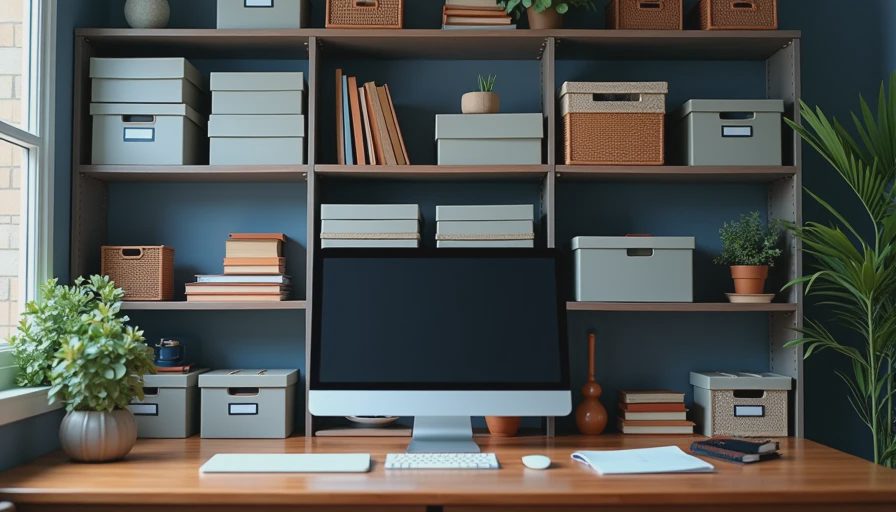
For a closet office, I like a split approach. Keep the monitor, keyboard, and active project supplies in the open, then push archive boxes, legal pads, and seasonal paper stock into labeled bins above or beside the desk. The key is repetition. If every bin has the same height and the same label position, you can find things fast and the space looks intentional. If you mix six container styles, it starts to feel like overflow storage.
Spend where the hardware works hardest
This is where people waste money. They buy a heavy-looking cabinet with flimsy drawer slides, or they spend on decorative hardware and ignore the parts you touch all day. Spend on full-extension drawer slides, decent hinges, and a finish that can take a coffee mug or a stapler sliding across it. Melamine is fine for a lot of home offices if the edge banding is tight and the panel thickness is honest. Plywood costs more and usually handles screws and repeated moves better. Solid wood is nice, but for storage it is not automatically the smart buy.
Warranty matters too. A one-year warranty on a desk is common, but a five-year or longer warranty on storage hardware tells you the maker expects the drawers and runners to survive real use. That matters more than a pretty catalog photo. If you are comparing a budget cube shelf from IKEA, a basic file cabinet from HON, or a closet system from ClosetMaid or Rubbermaid, look at the hardware and the panel edges before you look at the finish color. That is where the value lives.
The best home office storage ideas are the ones that clear the desk, control the clutter, and fit the room you actually have. Measure first, buy second, and build the storage around your work instead of around the furniture. If the office resets in five minutes at the end of the day, you chose well.