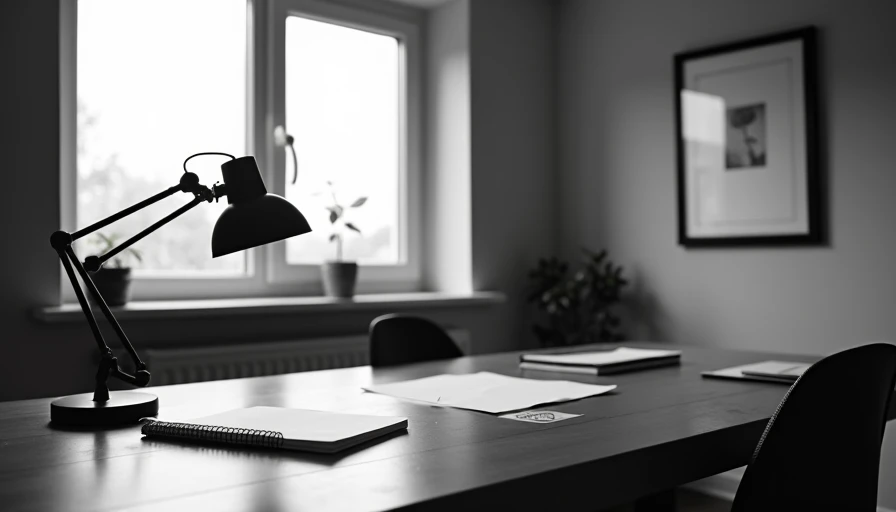
A desk lamp is not a decorative afterthought when you work eight hours at a time. It controls contrast between your monitor and paperwork, fills the shadows under wall shelves, and can make a 40-square-foot corner feel like a usable workstation. The right desk lamp should put light where your hands are without shining into your eyes or reflecting off the screen.
I look at lighting the same way I evaluate a desk: start with dimensions, then materials, controls, and the failure points you will notice after six months. A $35 lamp with a stable base and a good diffuser can outperform a $150 sculptural model that wobbles every time you adjust it.
What a desk lamp needs to do well
The first specification is coverage. A small task lamp with a narrow beam can illuminate a notebook, but it leaves the keyboard and mouse area in a separate pool of darkness. For a 48- to 60-inch desk, look for a shade or light bar roughly 16 to 24 inches wide, or choose an adjustable arm that can sweep across the full work surface.
The second specification is glare control. Bare LED points create harsh reflections on glossy paper and monitor panels. A frosted diffuser spreads those individual light sources into a softer line. If the lamp has exposed bulbs, position it outside your normal sightline and slightly above eye level. A diffuser is usually worth the extra $10 to $25 because it reduces the constant squinting that makes evening work tiring.
Color temperature matters too. Around 3,000K produces a warm, relaxed tone that works well in a bedroom or shared living room. Around 4,000K is a practical middle ground for spreadsheets, drafting, and video calls. Very cool light near 5,000K can feel crisp, but it is not automatically better; in a small room, it can look stark and compete with ceiling lighting.
Choose the right form for your desk
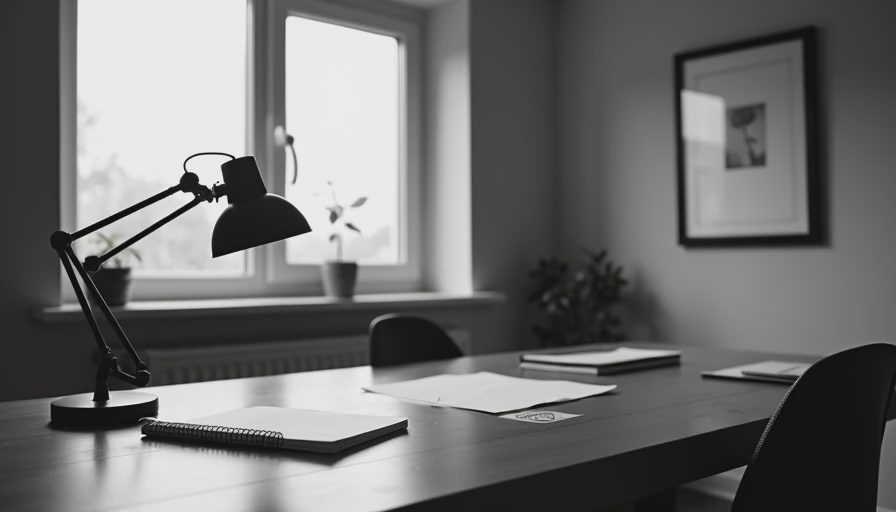
A desk lamp with a weighted base is the easiest choice for a fixed workstation. Look for a base at least 6 inches wide and heavy enough that the arm does not tip when fully extended. A metal arm with tension joints should move smoothly and stay in position without requiring two hands. Cheap plastic joints often loosen first, especially if you reposition the light several times each day.
A clamp lamp saves valuable depth on a shallow desk. It works particularly well on a 36- to 42-inch work surface, where a 7-inch base would steal room from your keyboard. Measure the rear edge before ordering: many clamps need 1.5 to 2 inches of clear underside space, and a rear cable tray can block them. Use a clamp with a rubber-padded jaw so it does not mark laminate or a wood veneer.
A monitor light bar is another option for compact setups. It sits on top of the display and throws light down toward the desk rather than toward the viewer. This can be a clean solution for a closet office or a shared kitchen counter, but it does not illuminate a notebook placed far to the side. It also depends on a reasonably flat monitor top and can interfere with a webcam mounted in the same location.
For a standing desk, avoid a lamp that is only tall enough for sitting height. On a 48-inch desktop raised to about 44 inches, the light source may end up below your hands. An adjustable arm with at least 18 inches of vertical travel is more useful than a fixed gooseneck. Route its cord through the desk's cable tray, leaving enough slack for the full sit-to-stand range.
Place the light without creating new problems
A right-handed writer usually benefits from placing the desk lamp on the left, while a left-handed writer often puts it on the right. That reduces the shadow cast by the writing hand. For keyboard-heavy work, place the lamp slightly behind the monitor line and aim it toward the desk's front half. The goal is an even work zone, not a bright spot directly beside the screen.
Keep the light source at least 20 to 30 inches from your face when possible. If you can see the LED chips from your normal seated position, lower the angle, rotate the shade, or add a diffuser. On a 10-by-11-foot office, I would rather use one moderate lamp plus indirect room light than a powerful lamp aimed straight down. Layered light keeps the contrast between screen, wall, and desk under control.
A desk lamp also needs a sensible switch. A cord switch is fine when the lamp sits within arm's reach. Touch controls are convenient, but they can trigger accidentally when you move a notebook or wipe the surface. An LED model with three brightness levels is enough for most people; paying extra for an app is rarely justified unless you already use smart-home scenes.

What to inspect before spending more
Read the product details for the LED module, not just the marketing name. A replaceable bulb gives you an easy repair path and lets you change brightness or color later. An integrated LED can be slimmer and cleaner, but look for a stated lifespan and a warranty of at least one year. If the manufacturer does not explain how the lamp is serviced, assume the entire unit becomes disposable when the electronics fail.
Check the power adapter and cord length. A six-foot cord is adequate for a standard desk near an outlet; a four-foot cord often forces an awkward extension-cord run. For a sit-stand desk, the cord should reach the outlet when the surface is fully raised, with a loop secured under the top. Do not let the cord hang where your chair arms can catch it.
Finish quality is visible in small details. Powder-coated steel resists chips better than thin painted metal, while cast aluminum arms generally feel more solid than hollow plastic. The base should have a nonslip pad that covers most of its underside. On veneer or solid wood, avoid a sharp metal edge that can compress the finish over time.
A practical buying plan for three setups
For a standard 60-inch seated desk, choose a weighted-base desk lamp with a 16- to 20-inch adjustable arm, a frosted diffuser, and 3,000K to 4,000K output. A realistic budget is $40 to $90. You do not need wireless charging or a color-changing app to get good task lighting.
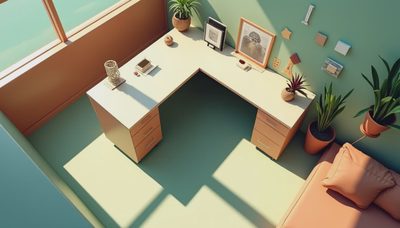
For a 42-inch corner desk, choose a clamp model or monitor light bar. Confirm clamp clearance, check the beam width, and keep the rear corner free for cable routing. A $25 to $70 solution can preserve several inches of usable work area, which is more valuable than a decorative base.
For a shared room, choose a slim lamp with a fully covered diffuser and a low-profile arm. The light should disappear visually when it is off and avoid throwing a bright cone across the room at night. If your partner works nearby, independent brightness control matters more than maximum output.
The best desk lamp is the one that matches the desk depth, your dominant hand, and the way you actually work. Measure first, identify the shadow and glare problem, then buy the simplest fixture that solves it. That approach usually leads to better results than choosing a lamp based on photographs alone, and it leaves more of the budget for the chair, monitor, or storage that will affect your work every day.